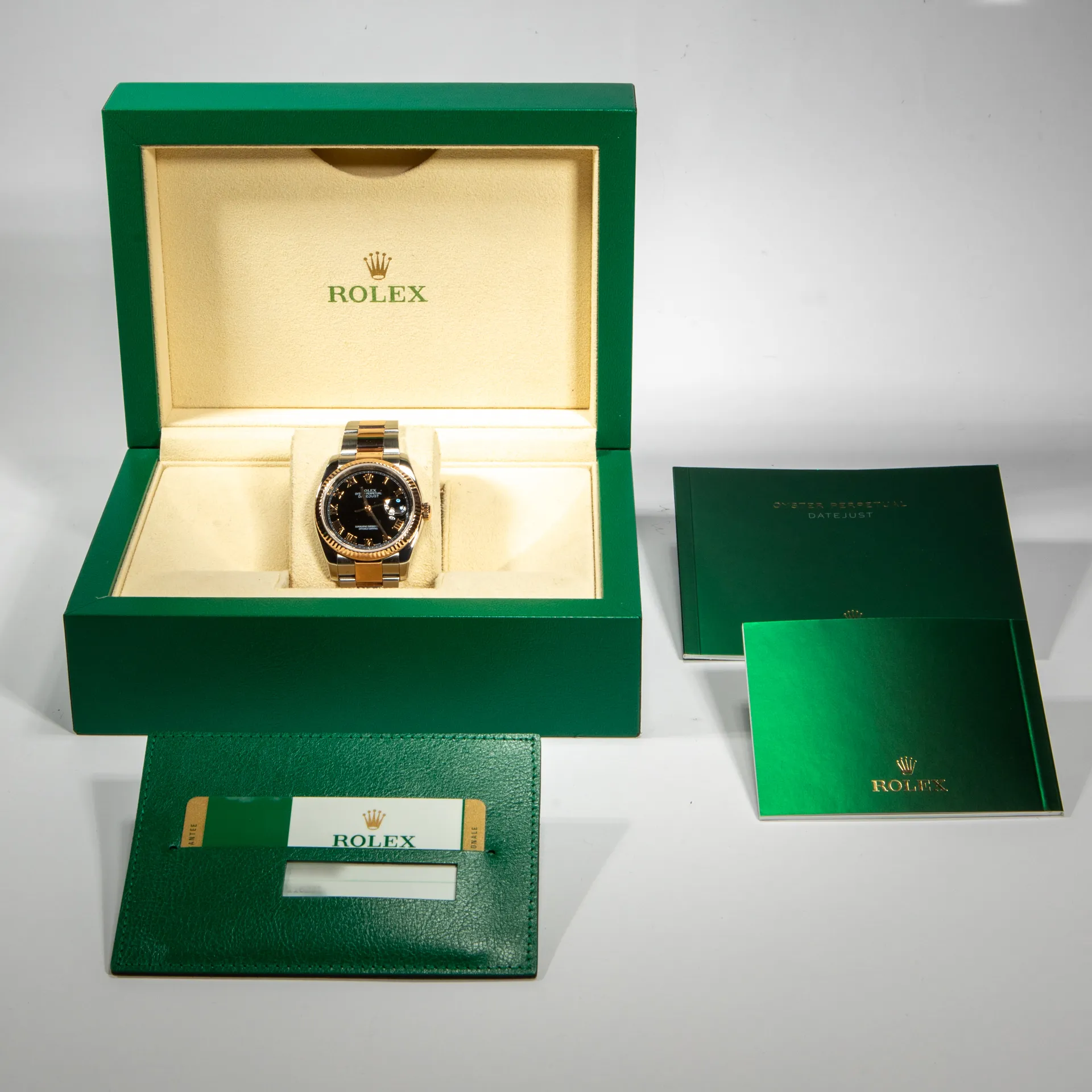
The Submariner is neither the most expensive, nor the toughest, nor the most complicated or most beautiful diver – so why is it so desired, valued and successful? One of the reasons is certainly its famous in-house Caliber 3135 movement, which has a reputation for being robust, accurate, long-lasting and easy to service. The movement’s faithful “service” for the glory and honour of Rolex began back in 1989, and over all these years it has earned the reputation of one of the most reliable and robust movements in general.
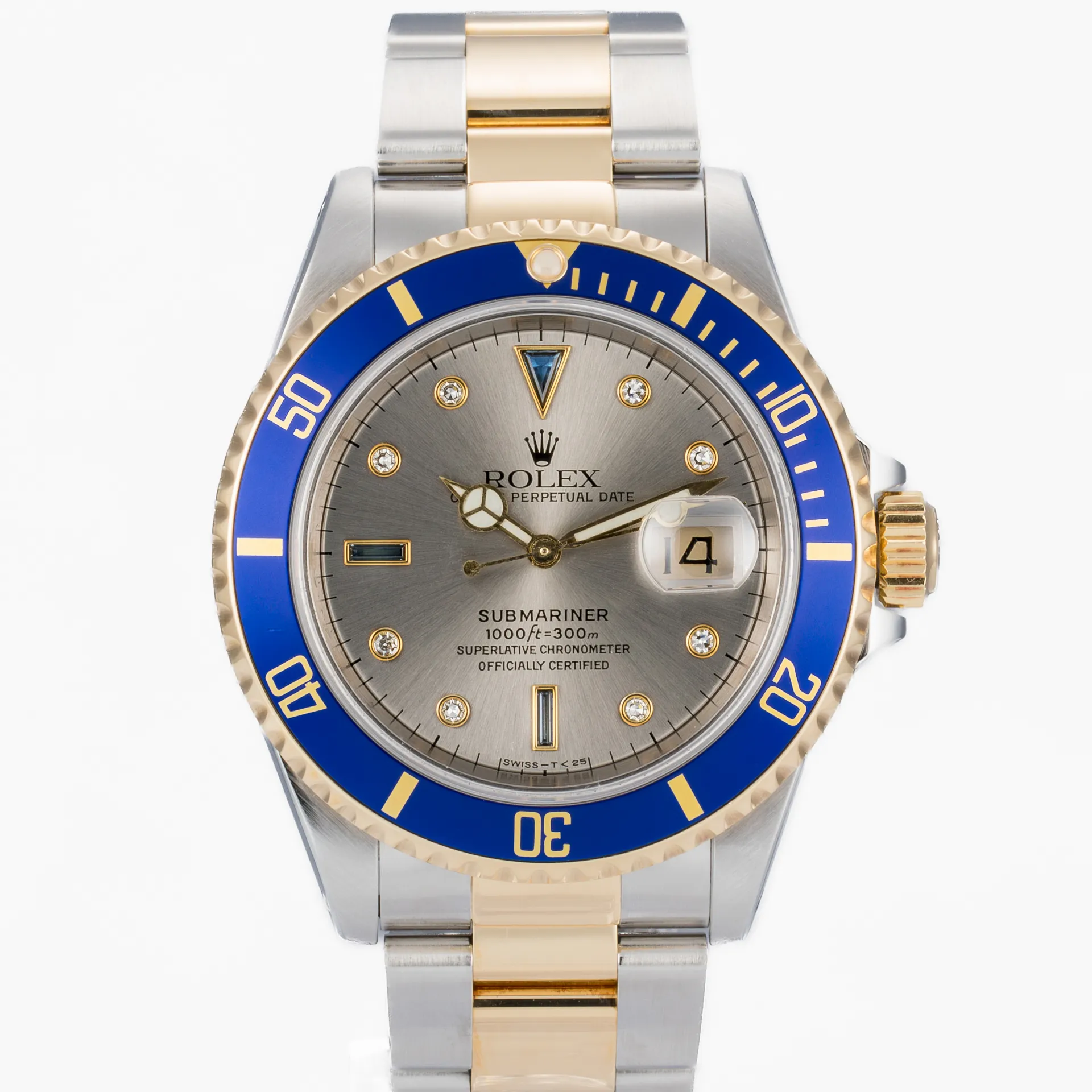
The model presented today began its commercial life in 1983 and became one of the most pursued and desired Rolex models in general. This particular model is one of the most expensive versions of the model with the so-called “slate serti dial” and, like most of the more special models, immediately received its nickname – “Sultan”. The case has so-called “drilled” lugs, while after 2003 the lugs were no longer drilled, but to this day the cases with the “holes” remain among the most sought after by collectors.
We are sure that most colleagues reading this text are aware that Rolex call their water-resistant cases Oyster. In other words, when this name appears in the name of the watch, it means that you can boldly explore the depths of the sea – and of course, the Submariner meets this qualification 100%. Developed as a diving watch in the 1950s, today the Submariner offers water resistance of 300 m, and despite the fact that 60 years have passed since the launch of the model, the differences in appearance between the contemporary model and the original are not very great. But as you can imagine, all of this is only at first glance...
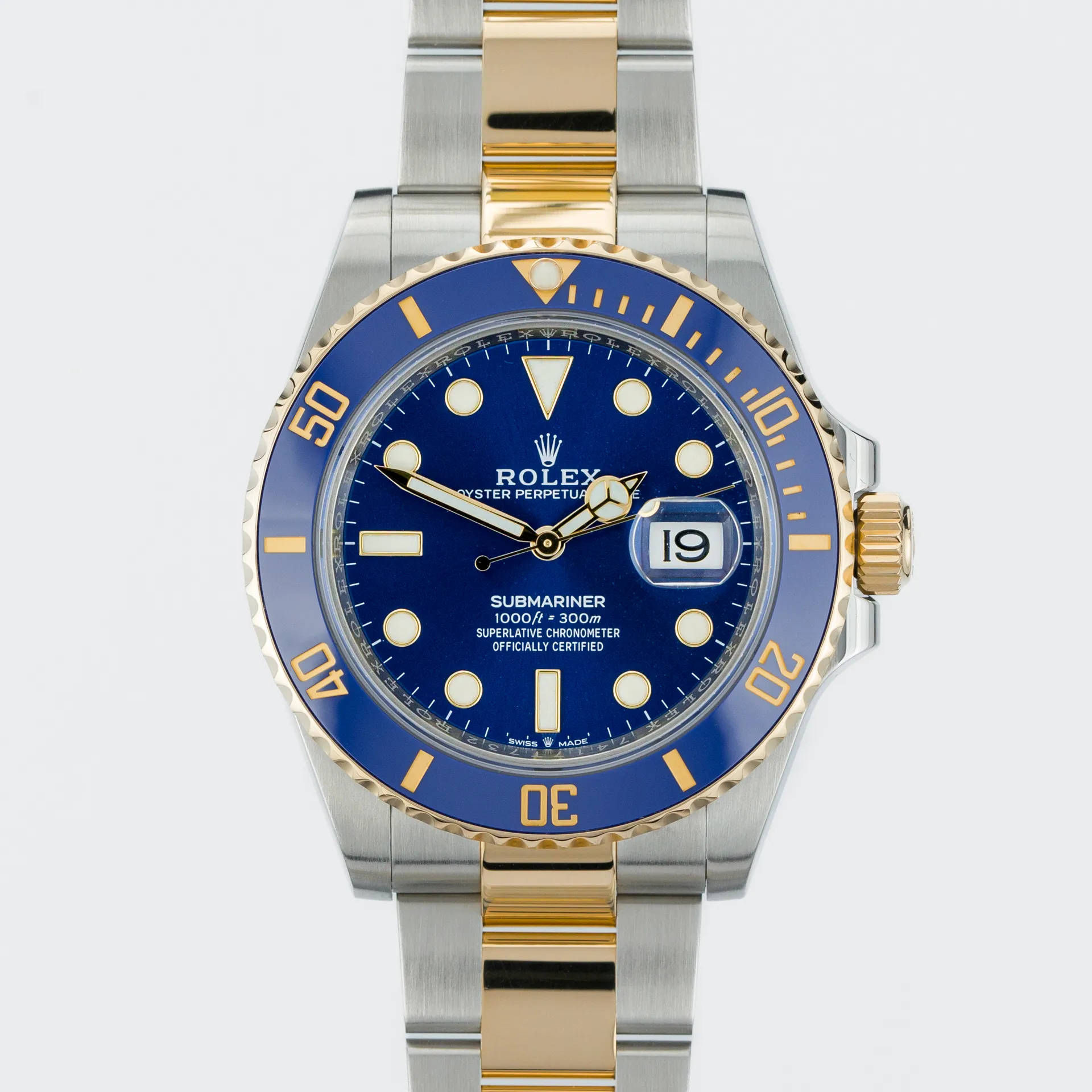
The dial of the watch is very clean and easy to read, while the luminescence of the hands makes it easier to use at night – it is in a pleasant greenish colour and glows sufficiently brightly and for a long time.
Although the Submariner is a professional instrument, as intended by the manufacturer from the very moment of its launch, it is clear to everyone that for quite some time it has become a luxury attribute – and for a long time this function has prevailed over the original reason for its creation. Perhaps precisely for this reason, Rolex do many things in this model in such a way that the appearance and overall impression created by the watch prevail over its functionality. The first thing that makes an impression is the sapphire – Rolex apply the anti-reflective coating only on the inner side of the cyclops, which allows the crystal to be more brilliant and glossy to look at. Next is, of course, the use of gold elements and, not least, the use of precious stones, thanks to which the model also receives its name as a hint of “aristocratic origin” – 8 diamonds for the hour markers and 3 black sapphires for the markers at “6”, “9” and “12 o’clock”, all set on a base in the so-called “champagne” colour.
For the caseback of the watch, Rolex use a plain solid back, as they do in all their models – in the case of the Submariner, it is devoid of any markings, inscriptions or other “decorations”. As we all know, Rolex use noble 904L steel for their watches – the difference compared with the 316L steel commonly used by other brands lies in its greater resistance, especially to salt water, and in this particular model “everything yellow is gold” – bezel, crown, centre links of the bracelet, hands and indexes – everything is made of 18-carat gold and, combined with the main blue colour of the dial, gives a superb finished result. It is widely known that Rolex can be called fanatics when it comes to the steel they use – a large part of the metallurgical processes are carried out in-house in order to guarantee consistent quality of the raw material. Many watches have passed through our hands, but we can say absolutely categorically that few brands devote so much attention and effort to the quality of the final product from the point of view of case finishing – and as a result, the outcome can only be unique quality and presence. As far as the gold elements are concerned, Rolex also have their own foundry and produce cases and details not only for their own watches, but also accept orders for many other manufacturers.
The overall impression is complemented by the diving bezel of the watch – its purpose is clear: to measure time while you are underwater – trivial, isn’t it? In this Sub model, the bezel is made of solid gold, while the bezel insert is made of aluminium with minute markers printed on it in gold paint – the traditional “pip” at 12 o’clock, and there you have the final product.
For many years, the Submariner has been offered with a three-piece steel bracelet with a profile tapering towards the clasp – with this model, the tradition has been preserved and, from this point of view, the bracelet remains just as comfortable. As we have already mentioned, the centre links are made of 18-carat gold, while the clasp has a safety lock, micro-adjustment capability and a diver’s extension.
Truly, in the 1950s Rolex created a great product and invested the following 60 years in improving and perfecting it. If at the beginning it was valued by customers as a not very expensive everyday watch, today it is to a greater extent a fashion accessory, which nevertheless has all the qualities to become a long-term partner of its owner. Besides not letting you down, it will also not lose much of its value, because it is no secret to anyone that this brand not only cannot be found with large discounts when new, but also has the reputation of producing some of the watches that best retain their value. And this particular model can confidently be placed among the front ranks of Rolex in terms of popularity and, accordingly, among the most sought-after and desired models. One of the reasons for this is certainly the fact that this watch looks equally good on your wrist whether you are wearing a formal suit or worn jeans and a white T-shirt – in both cases, the Submariner will help attract approving glances towards your appearance. And this particular model, with its gold elements and precious stones, gives additional aristocracy both to its own appearance and to the overall presentation of its owner.