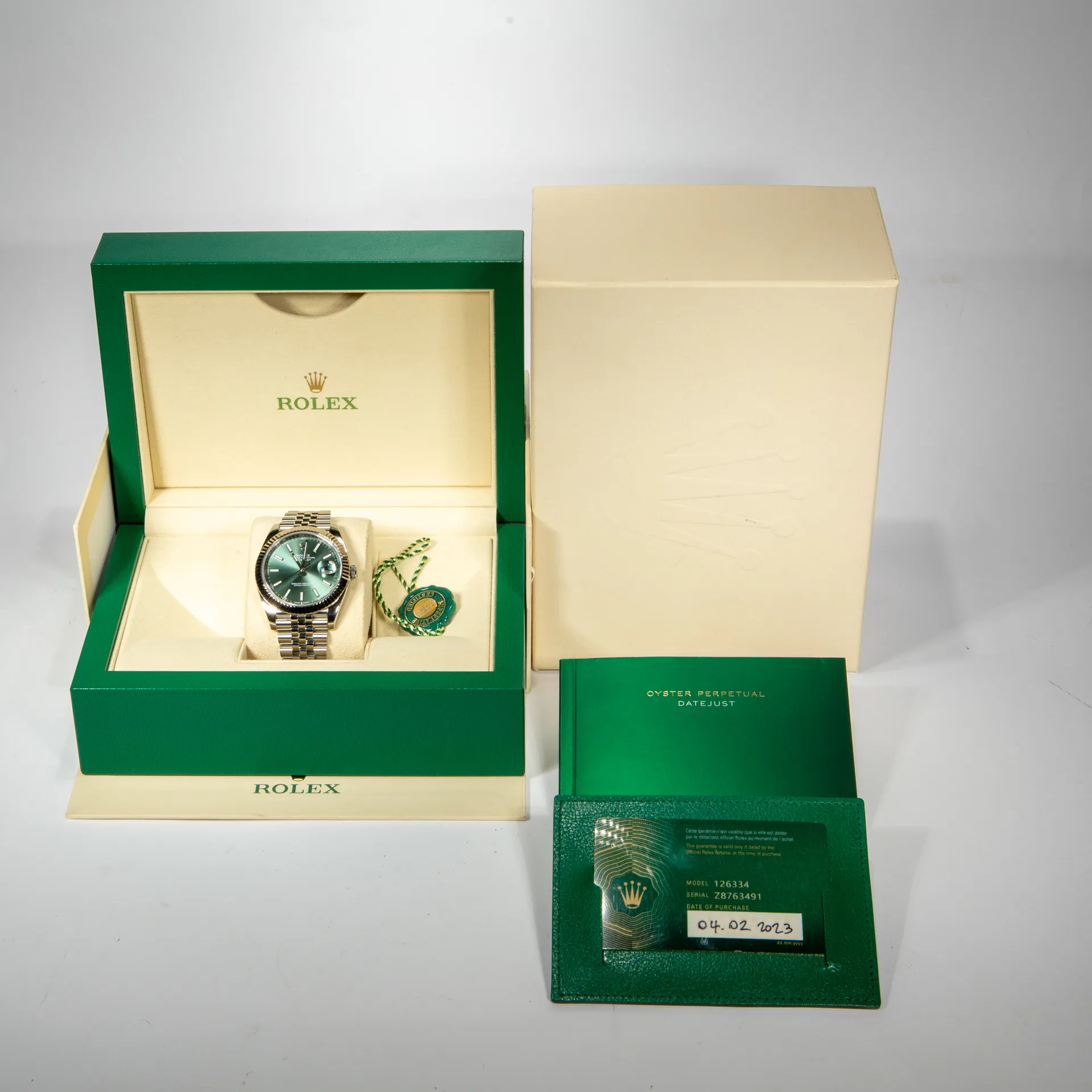
When the first Rolex Datejust was introduced in 1945 – the year of the brand's 40th anniversary – it made history as the first self-winding, waterproof, certified chronometer with a date indication on the dial. The “Cyclops” was added in 1953 to magnify the date display two and a half times, making it clearer and easier to read, and this feature has since become one of the most recognisable characteristics of Rolex watches in general.
In 2009, Rolex introduced the Rolex Datejust II. This line of watches offered the characteristics of the original and iconic Rolex Datejust in a more modern design, incorporating a number of innovations. One of the most significant differences between the Rolex Datejust and the Rolex Datejust II was, of course, the size – the new model measured 41 mm, considerably larger and in line with the growing trend towards larger watch cases. The other difference was the movement – the Datejust II had the honour of housing the brand's Calibre 3136, an in-house movement featuring Paraflex shock protection, a Parachrom hairspring, COSC chronometer certification, an approximate 48-hour power reserve and an operating frequency of 28,800 vibrations per hour.
In 2016, the brand introduced the new generation of the model – the Rolex Datejust 41, which replaced the Datejust II and included reference 126333. One of the biggest changes was the movement – the new Calibre 3235, which offered an increased power reserve of 70 hours, a significantly improved automatic winding system with the rotor now mounted on a ball bearing, and the new Chronergy escapement, whose efficiency was increased by approximately 15%. A number of patented technical solutions were incorporated, including the paramagnetic Parachrom hairspring and Paraflex shock protection system. The new calibre incorporates 14 patented solutions, while more than 90% of its components are new compared with the previous generation of movements. Furthermore, it is certified as a Superlative Chronometer, with an accuracy of −2/+2 seconds per day after casing – a standard considerably stricter than the official COSC requirements.
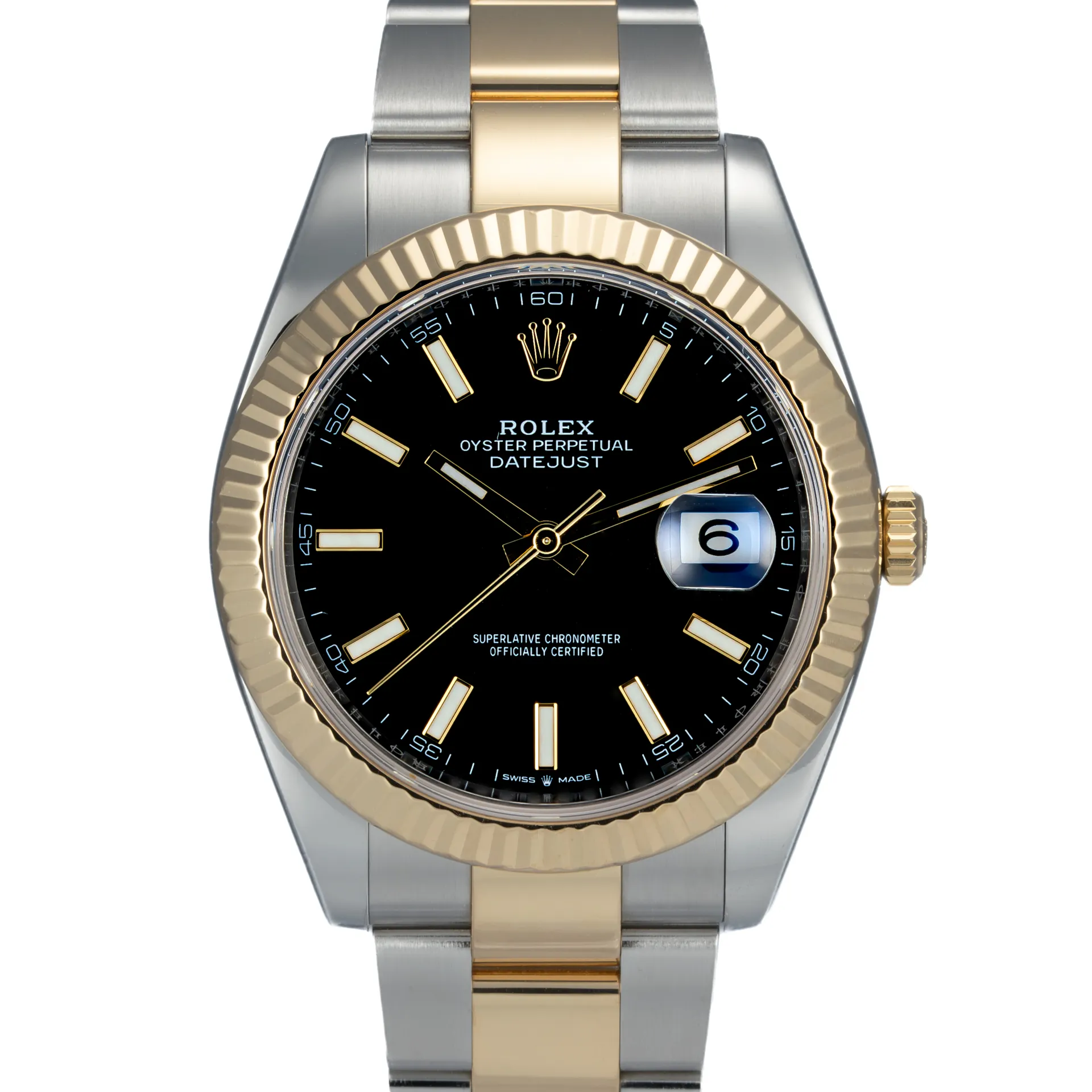
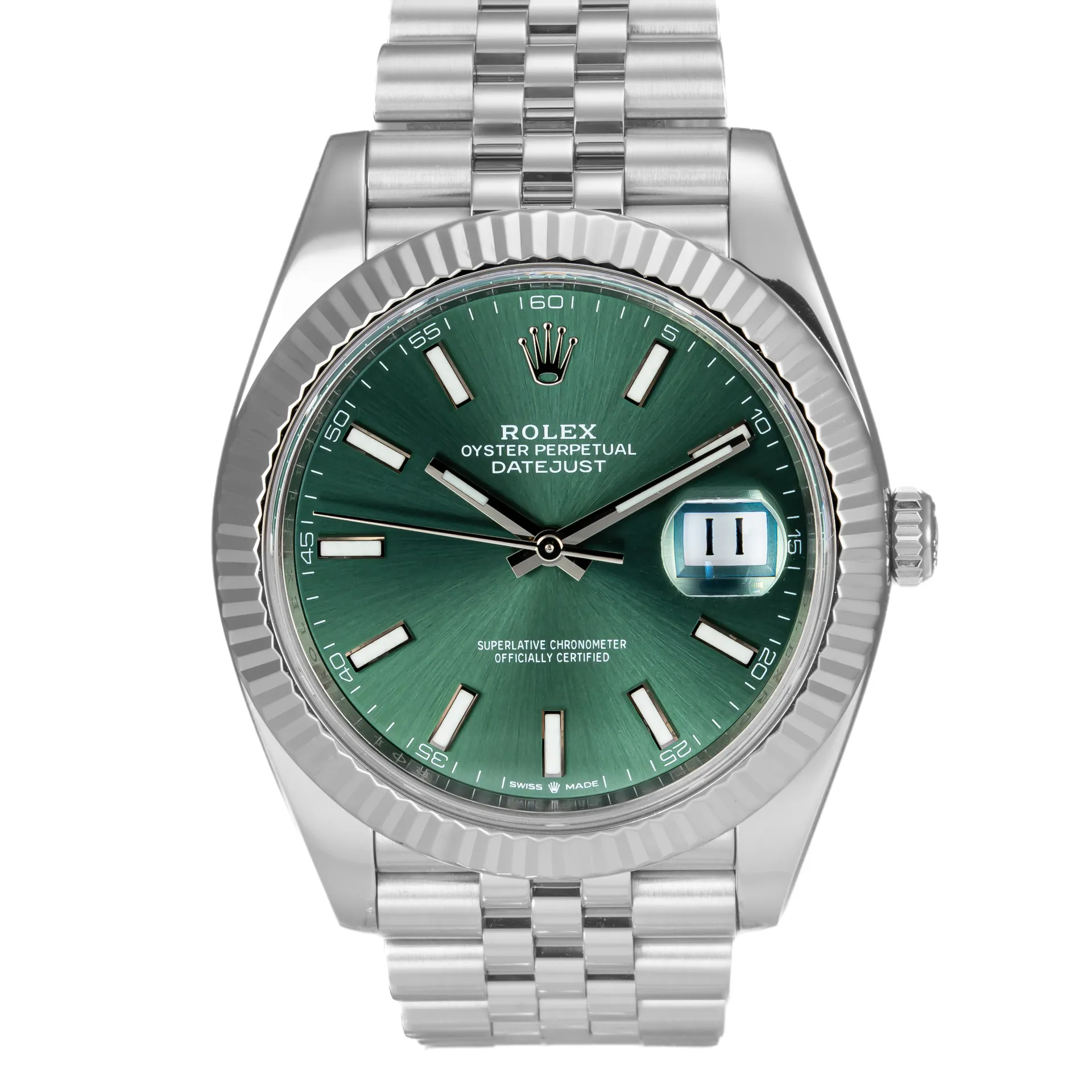
It is no coincidence that the Datejust is one of the most popular and recognisable models of the brand after the iconic Submariner – and the Datejust 41 allows this popularity to be presented in a contemporary interpretation. This particular watch comes in a classic and exceptionally successful combination – a black dial with luminous hour markers, stainless steel and yellow gold, complemented by the sporty yet elegant Oyster bracelet.
The details of this watch (as indeed of all modern Rolex watches we have had the opportunity to present) are truly impressive. Starting with the incredible dial – in this particular example, we are talking about what Rolex call the “Bright Black Dial”, whose characteristic sunray finish creates beautiful reflections and changes its shades depending on the light and viewing angle. The gold-tone hour markers and hands complement the watch's distinguished appearance, while the Chromalight luminescent coating ensures excellent legibility even in low-light conditions. The contrast between the deep black colour and the warm yellow gold is one of those classic combinations that never go out of fashion.
Moving on to the renowned sapphire crystal with “Cyclops”, everything is executed with the precision and attention to detail characteristic of the brand. The scratch-resistant sapphire crystal protects the dial, while the magnifying lens above the date window ensures excellent legibility.
Of course, separate attention must be paid to the case and bezel – a jewellery-like combination of brushed and polished, high-grade 904L steel, which Rolex call Oystersteel, with 18-carat yellow gold. As you know, Rolex pay special attention to the materials they use and, for this purpose, have their own metallurgical facilities for producing their precious metal alloys. The brand calls the combination of steel and yellow gold Yellow Rolesor – one of the most classic and recognisable combinations in the history of the Datejust.
The bezel features the brand's characteristic “fluted” design, giving the watch a unique appearance and making it entirely different from the Datejust 41 with a “smooth bezel” – they are simply different watches! This one has a striking presence on your wrist, and the fact that the bezel is crafted from solid 18-carat yellow gold further reinforces the overall impression. Combined with the black dial, gold-tone hour markers and polished details, the result is an exceptionally elegant watch that remains sporty enough for everyday wear.
And, of course, the bracelet, strap, chain or whatever you prefer to call it – as one would expect from a Rolex, it is genuinely good... In this case, we are talking about the three-link Oyster bracelet with solid links, with the centre links made of 18-carat yellow gold and the outer links crafted from Oystersteel. The bracelet features a substantial folding Oysterclasp, manufactured with Rolex's characteristic precision rather than from ordinary folded sheet metal, as is the case with some other manufacturers.
The only thing it lacks (but perhaps only in our opinion) is the Glidelock clasp of the Submariner, although here we do have the so-called Easylink, which allows the bracelet to be quickly and conveniently extended by an additional 5 mm. The lug width is 21 mm, while this particular bracelet has 11 links and, in our estimation, will be suitable for a wrist measuring up to approximately 19.5 cm in circumference, depending on individual fit and bracelet adjustment.