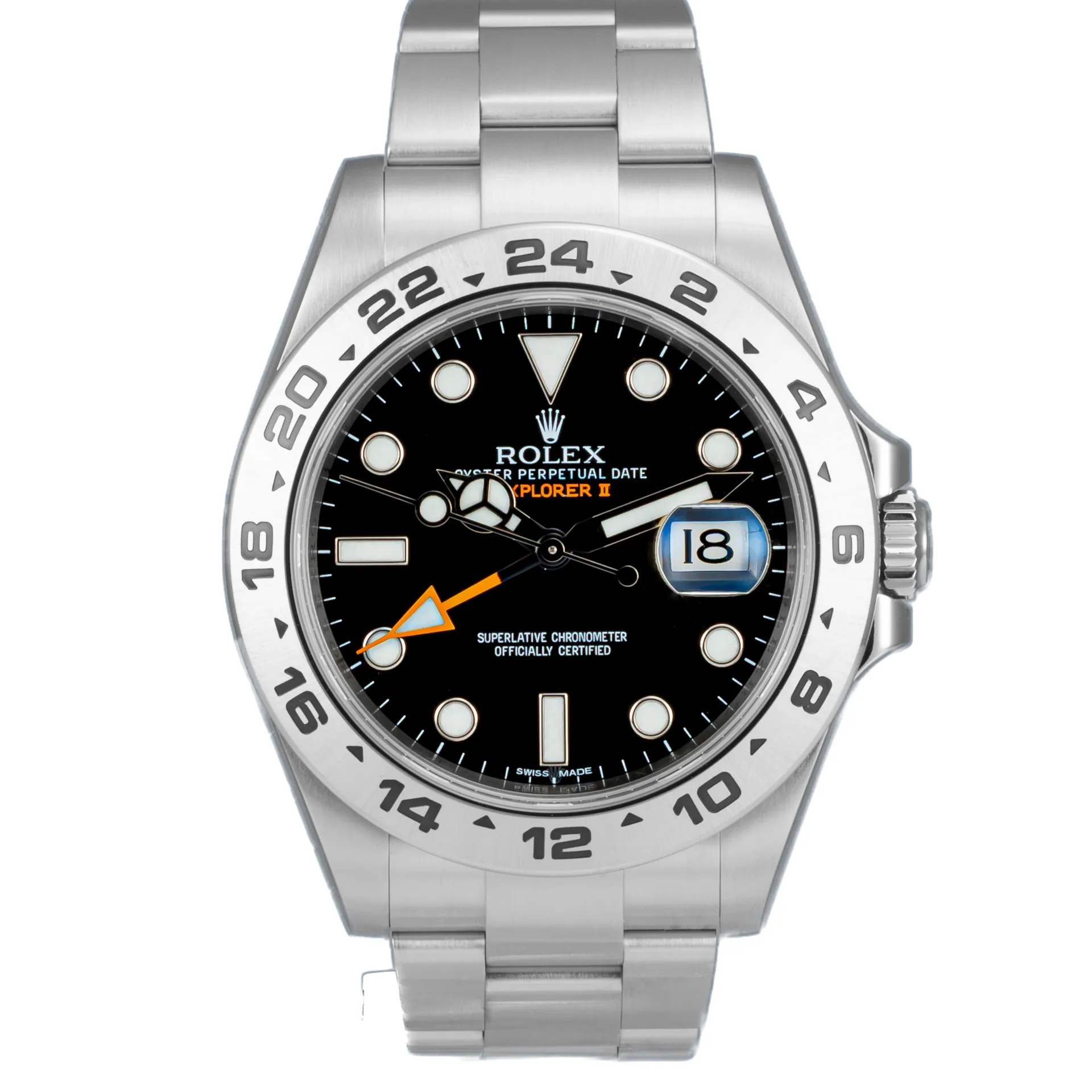
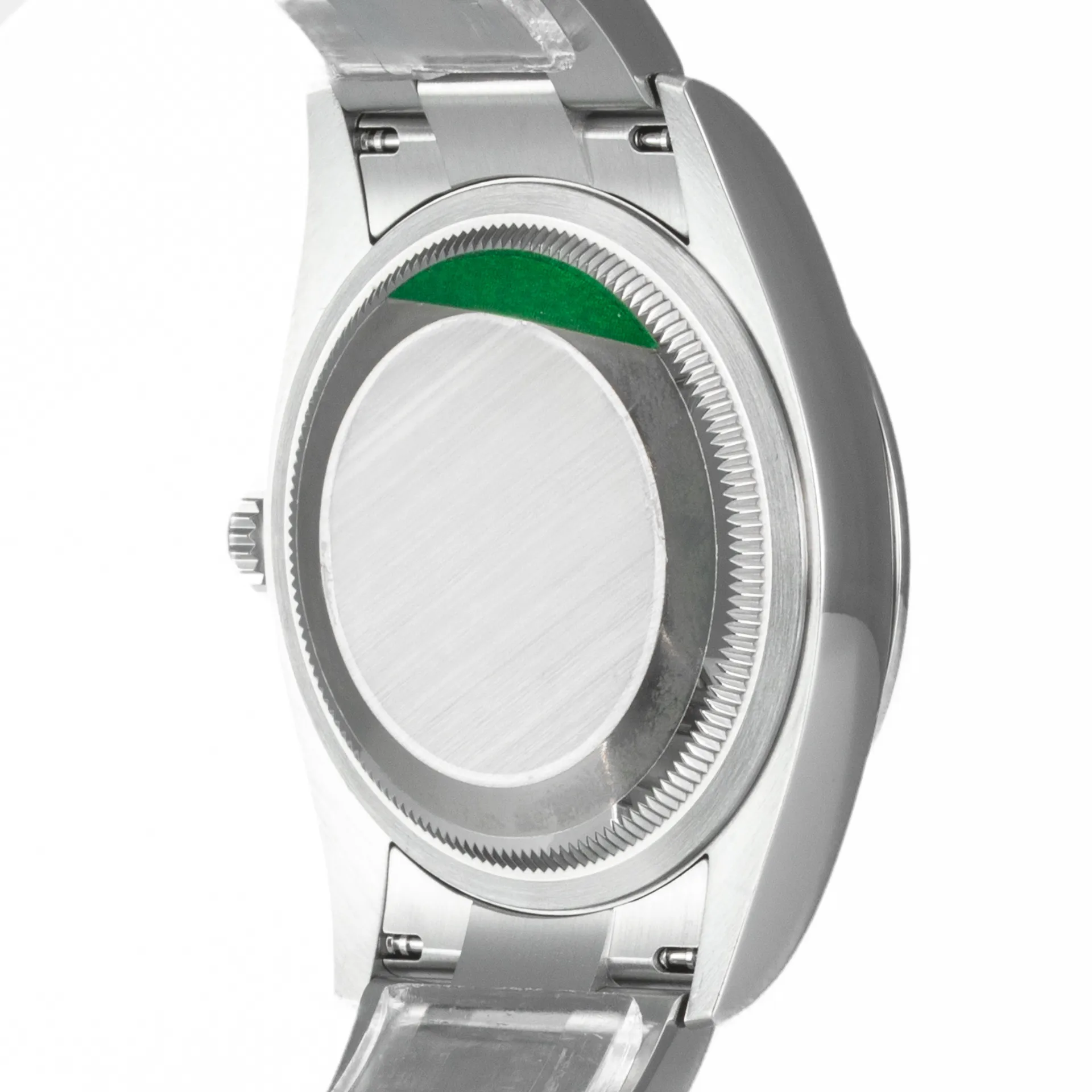
The watch was introduced in 2011 to mark the 40th anniversary of the launch of the first Explorer II and continues the model’s glorious tradition in a contemporary interpretation. It rarely happens to us, but here we genuinely do not know where to begin, so we will focus on the most important things, in our opinion, that deserve attention.
The movement – an in-house calibre with Paraflex shock protection, Parachrom hairspring and Twinlock crown – Rolex not only create their own movements, but also patent systems, technologies and even alloys. Red point number 1!
Undoubtedly, the most distinctive feature of the model is its size – Rolex move away from their standard 40 mm and make this watch in the very attractive, at least for us, size of 42 mm. We really like this. And on top of that, they increase the size of the crown, and unlike the 6 mm crowns used in other models, this Twinlock is 7 mm – this is definitely red point number 2!
Despite the fact that they already have a model in their range with a GMT function and, respectively, an in-house movement for it, Rolex create a separate movement specifically for this watch. “But the differences are only in the last digit – Calibre 3186 for the GMT-Master II versus Calibre 3187 for the Explorer II,” you might say. Exactly, but not quite. Unlike other manufacturers, even those with in-house movements, Rolex do not compensate for the larger Explorer case with spacers or thicker case walls, but instead enlarge the movement itself by almost 2.5 mm – 30.97 mm for the 3187 versus 28.5 mm for the 3186. Red point number 3!
We think that is enough with the distinctions, so that there is room to share some personal impressions as well.
The detail of this watch, as indeed of all modern Rolex watches we have had the opportunity to examine, is truly impressive. Starting with the incredible dial – in the watch presented here, this is the classic black version – which under certain angles seems almost to disappear, creating the impression that the hands and markers are “floating” in the air in a kind of weightlessness. The markers and hands feature Chromalight luminescence, glowing in a pleasant bluish tone, while the illumination literally lasts throughout the night. They are also in the brand’s modern “maxi” size, used in the current sports models of that period.
Moving on to the incredible sapphire crystal with “Cyclops” – in this case, a high-grade sapphire has been used, which wonderfully complements the overall presence of the watch. Of course, separate attention must be paid to the case and bezel – an incredible combination of brushed 904L steel of the highest class, with faceted polished edges and details in certain places. As you know, Rolex pay special attention to the steel they use and, for this purpose, have their own foundries for its production – this would have been another red point, but we promised to stop, and besides, this steel is used in most of the brand’s models.
And of course, the bracelet, strap, chain or whatever you prefer to call it – as one would expect from a Rolex, it is genuinely good. In this case, we are talking about the Oyster bracelet, reference number 77210, with solid links and a solid clasp made from a single piece of steel, not from bent sheet metal as with most brands. The only thing it lacks, but only in our opinion, is the GlideLock clasp of the Sub, although here we do have the so-called EasyLink, which allows micro-adjustment by an additional 5 mm. The lug width is 21 mm, and the full bracelet size includes 5 links on the 6 o’clock side of the case, 2 of which are removable, and 7 links on the 12 o’clock side, 4 of which are removable.