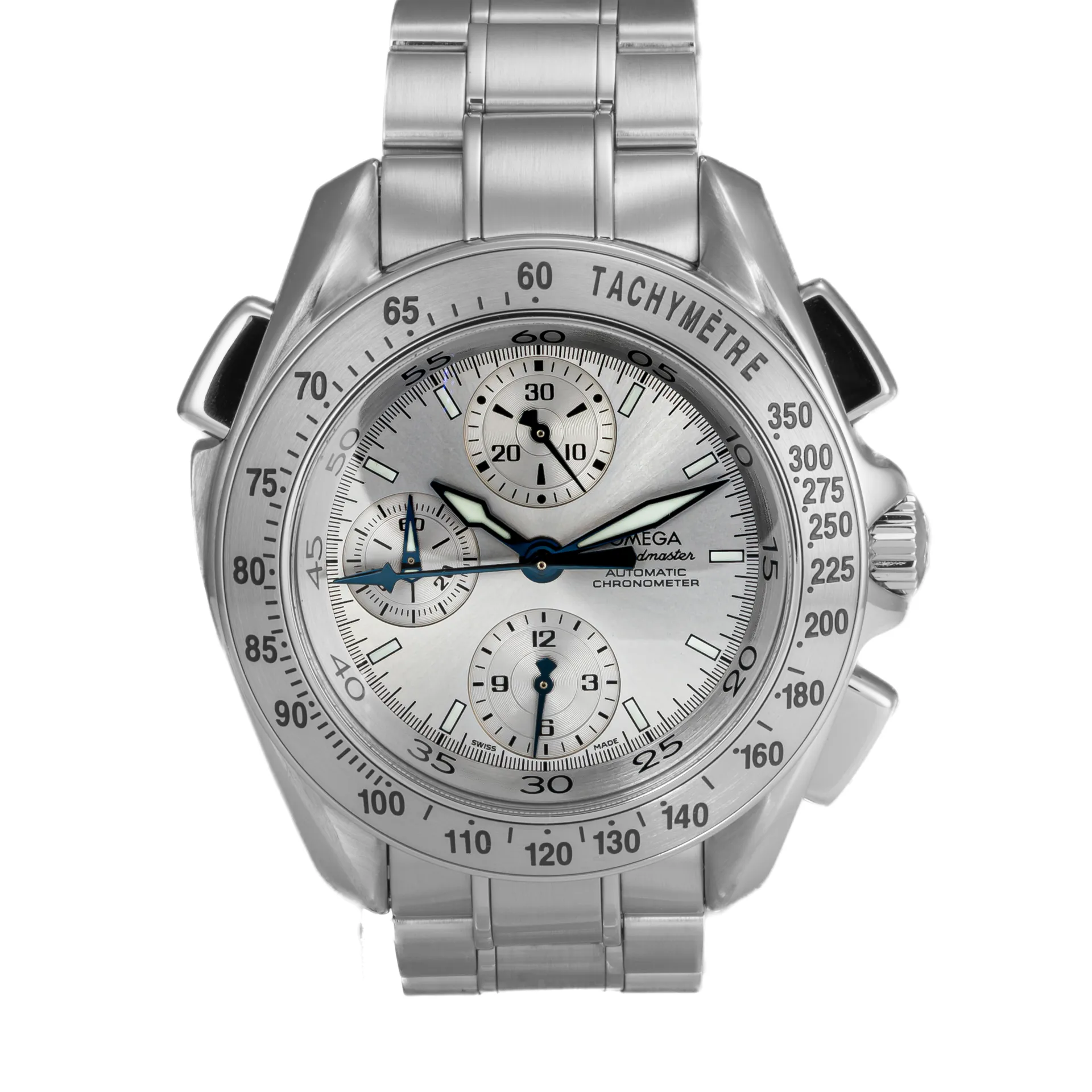
Undoubtedly, Speedmaster is the name that comes to mind for every watch enthusiast whenever Omega is mentioned. Much of the credit for this belongs to the so-called “Moonwatch” Speedmasters, but the collection also includes several other models that rightfully deserve a place of honour on enthusiasts' lists. Today, we have the pleasure of presenting one of them – the Omega Speedmaster Split Seconds, reference 3540.30.00.
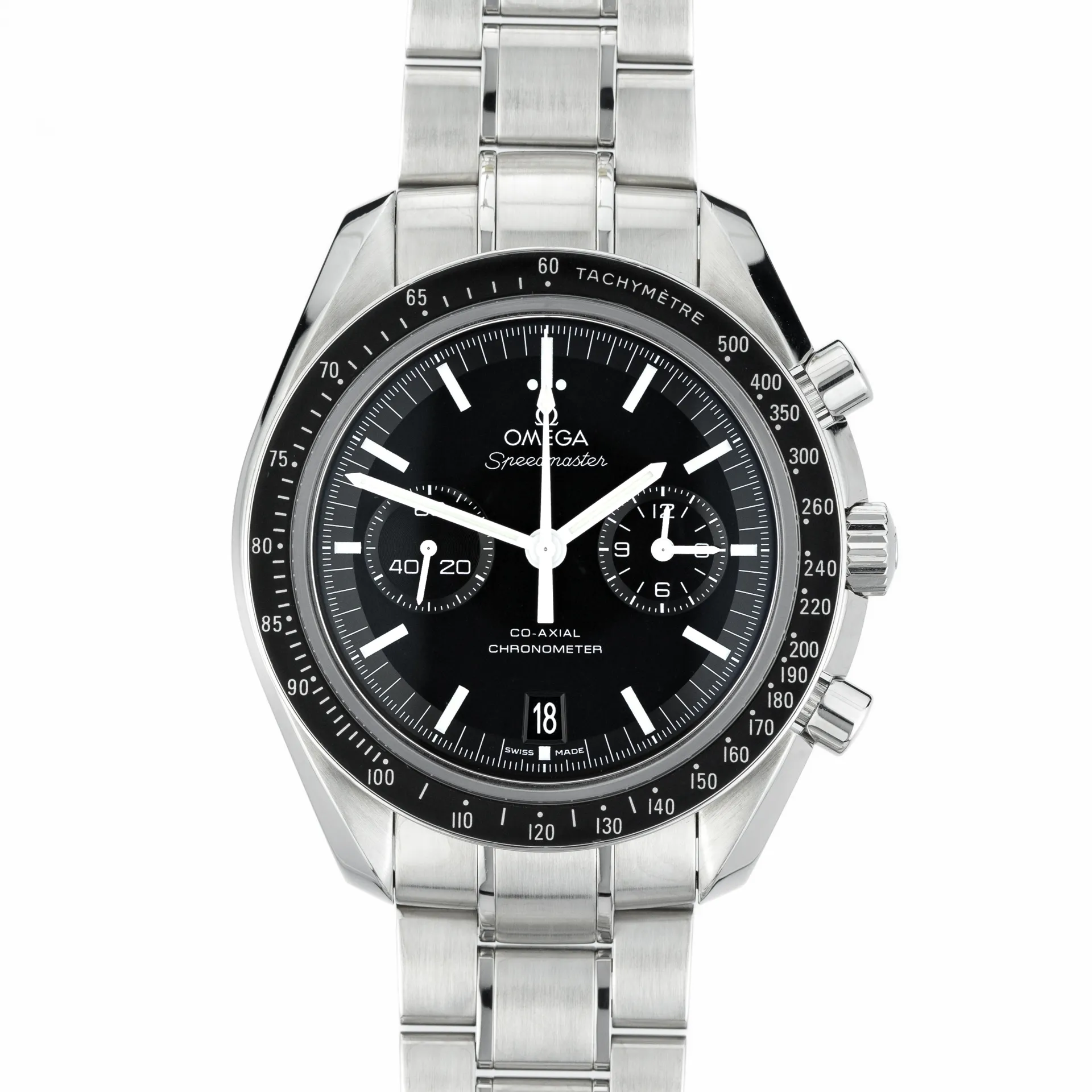
This model deserves attention for several important reasons. First, of course, it is a genuine Speedmaster – with its characteristic case shape, tachymeter scale and three subdials. Here, however, Omega have chosen a silver dial with blue hands, and in our opinion, this combination is one of the most successful designs of the model. The stainless steel bracelet preserves its sporty character, while the light-coloured dial adds a little more elegance. The case measures 42.25 mm, but if you prefer your watch to fit beneath a shirt cuff, pay attention to its thickness as well – approximately 16.1 mm.
Second, of course, is the chronograph itself. If you are wondering what the additional pusher on the left side of the case is for, the answer lies in the two central chronograph seconds hands. When the chronograph is started, they move together, perfectly superimposed, appearing as a single hand. Pressing the additional pusher stops one of them to allow an intermediate time to be recorded, while the other continues running. Press it again, and the stopped hand instantly catches up with the other. Imagine two competitors starting a race together – you can record the finishing time of the first while the chronograph continues timing the second. This is precisely what rattrapante, or a split-seconds chronograph, is all about, and watching the hands catch up is the sort of detail that makes you want to operate the chronograph even when there is nothing to time.
Third, the movement. Here Omega have chosen the automatic Calibre 3600, certified as a chronometer, with 28 jewels, a frequency of 28,800 vibrations per hour and a power reserve of approximately 42 hours. The movement is based on the ETA/Valjoux 7750 architecture but has been extensively modified to accommodate the complex rattrapante function. It is precisely this movement that makes the reference so interesting to Speedmaster enthusiasts. The silver dial and blue hands attract the eye, but the additional pusher is what will keep you coming back.