DateDisplay backSmall secondsLuminous handsLuminous indices
Description
Zenith was founded in 1865 by Georges Favre-Jacot, who, at the tender age of 22 for a master of such caliber, was one of the first watchmakers to not only understand the importance of the principle of interchangeable parts, but to build his entire production around it. Perhaps this is one of the reasons why, by the time of Jacot's retirement in 1929, Zenith was already an integral part of watchmaking history with numerous awards for precision won at international exhibitions in Geneva, Paris, Barcelona, and Neuchâtel. In 1969, the company gained fame with the introduction of the world's first automatic chronograph movement – the famous El Primero. Operating at 36,000 vibrations per hour, the El Primero is capable of measuring short time intervals with an accuracy of up to one-tenth of a second – an unsurpassed world record. In 1995, Zenith launched the production of a new generation of ultra-thin chronographs – Elite, which movement was declared the best movement by the professional press shortly after its launch. Since its inception, Zenith has been awarded more than 1565 of the most prestigious awards in chronometry, making the brand the most recognized in the world of the watchmaking industry.
Until 2001, Zenith produced mainly classic watches in the so-called "Swiss style": elegant, minimalist, in most cases no larger than 38 mm, with in-house movements with a superb finish. In 2001, Thierry Nataf took the position of CEO and in the following 8 years (until the beginning of 2009), the brand took a completely new direction…
Huge, lavish watches with loud names and, to put it mildly, bold designs. The assessments of this period are controversial, but we can easily agree that it gave birth to many now-iconic series of the brand: Chronomaster, Defy, Defy Xtreme, Port Royal and many others. It was during this period that such experimental approaches in watch design as the "Open heart" were introduced – which became iconic and was copied, successfully or not so much, by many other brands.
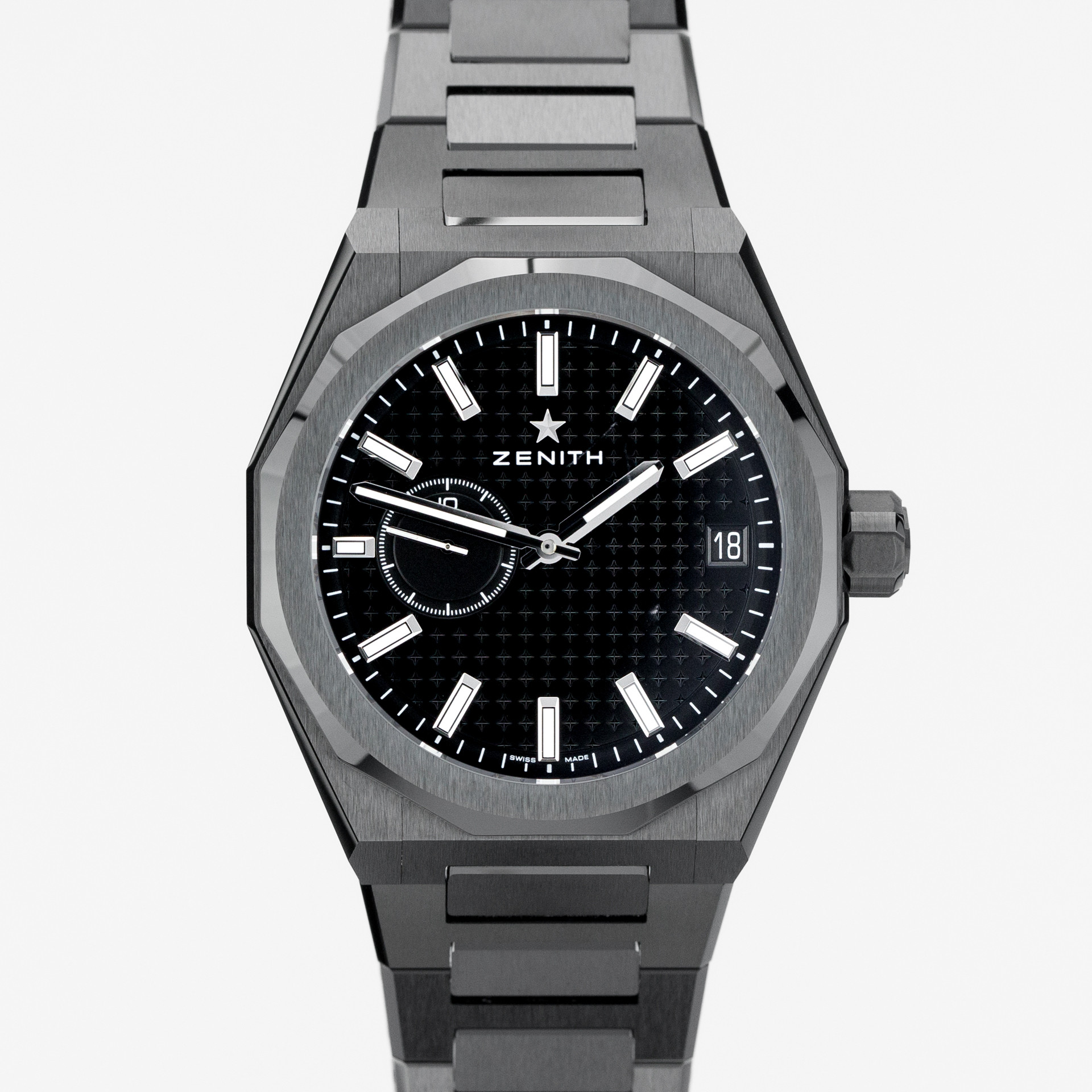
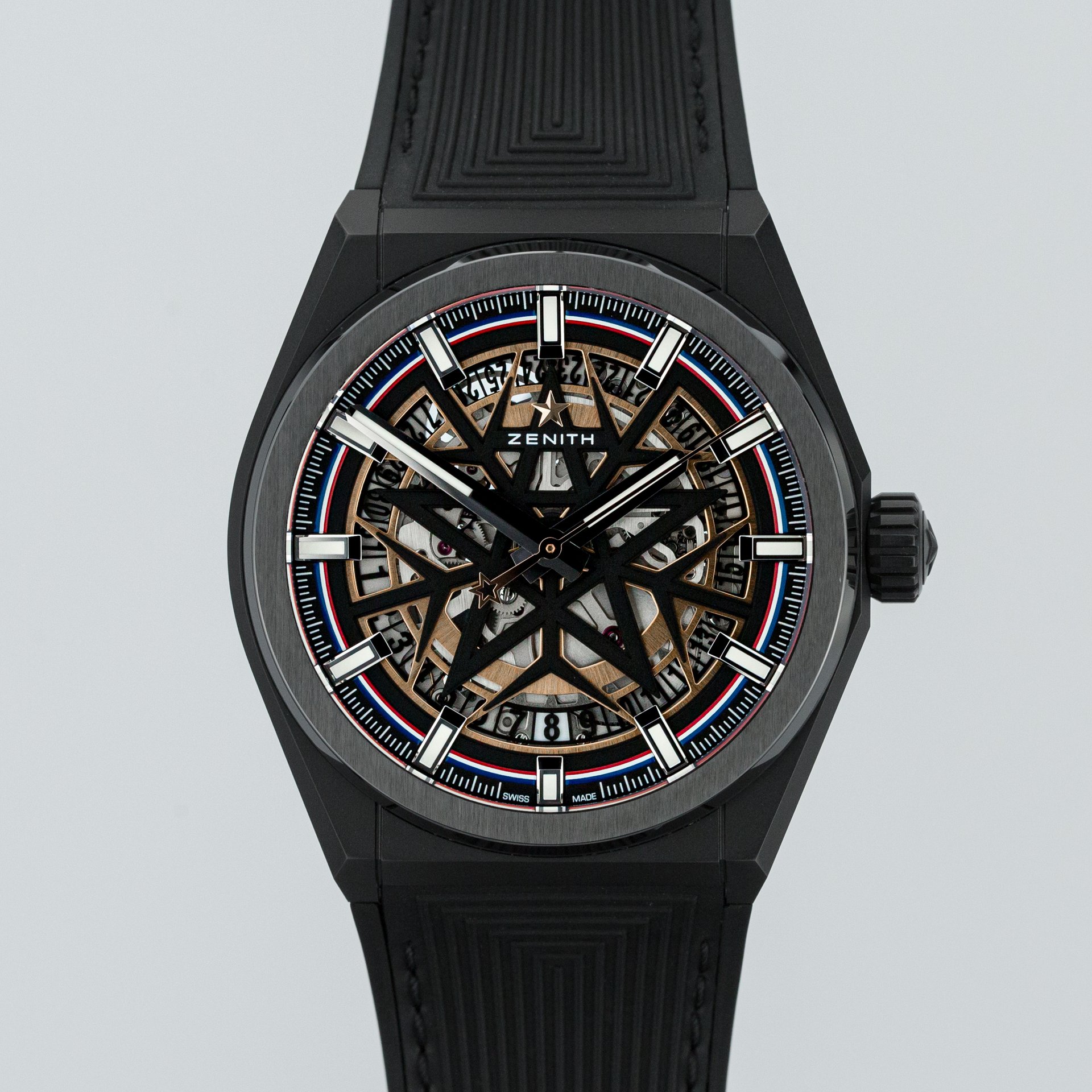
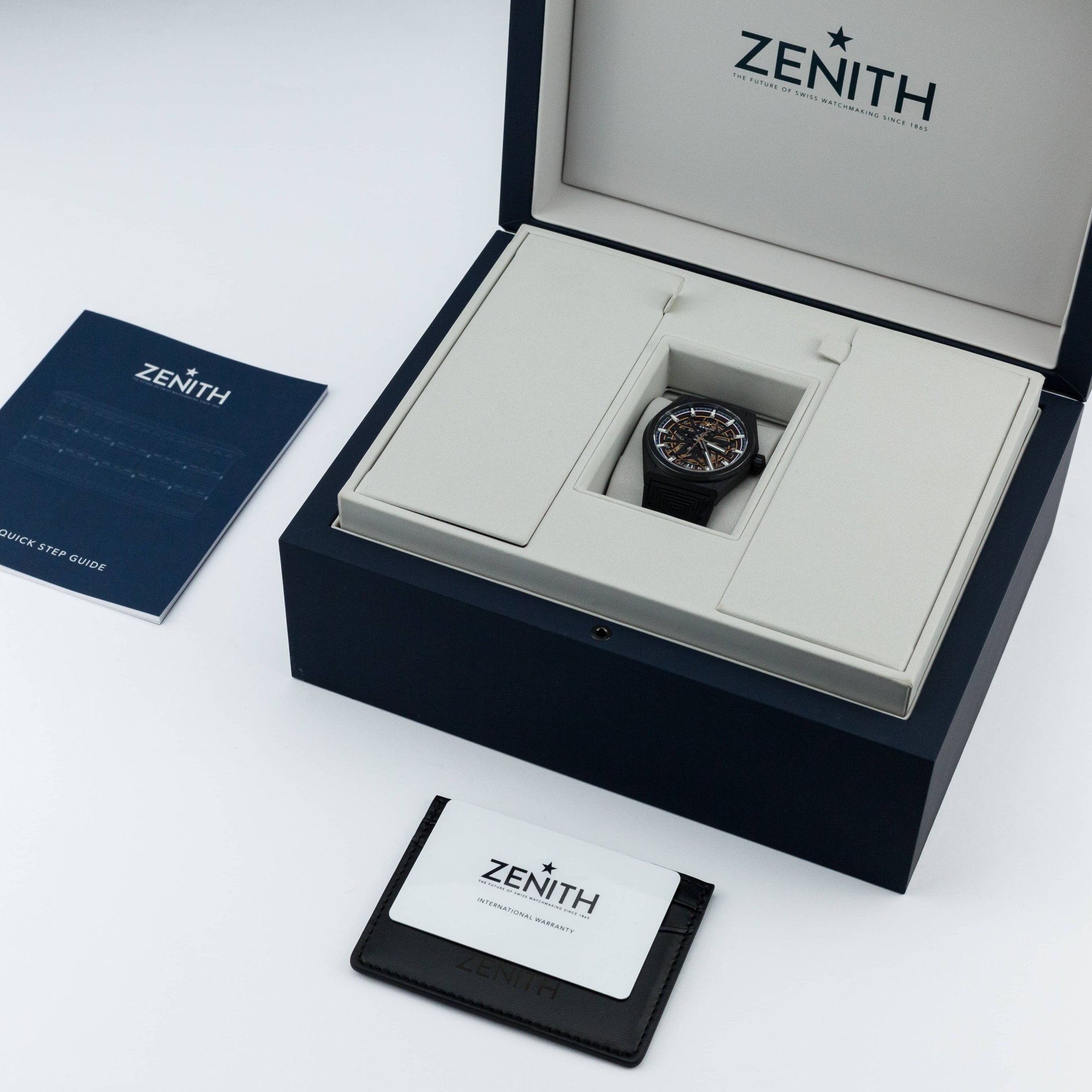
We present to your attention a representative of the Defy series, which is tasked with the very difficult mission of erasing the fiasco of the failed Defy Xtreme experiment – the Zenith Defy Skyline Black Ceramic.
The series was first introduced in 2022 and immediately became much loved and sought after by fans of the brand. Its goal is to become the flagship of the Defy collection – which in turn is called "the locomotive of Zenith," because of the sales volumes it brings to the brand and because of the fact that it is here that all the brand's innovations in the field of movements, designs, etc. are launched. Today's model was launched a year later and its goal is obvious – an attempt by Zenith to "play in the big leagues" by using unusual materials in its top models, in this case the entire watch along with the bracelet are made of black ceramic.
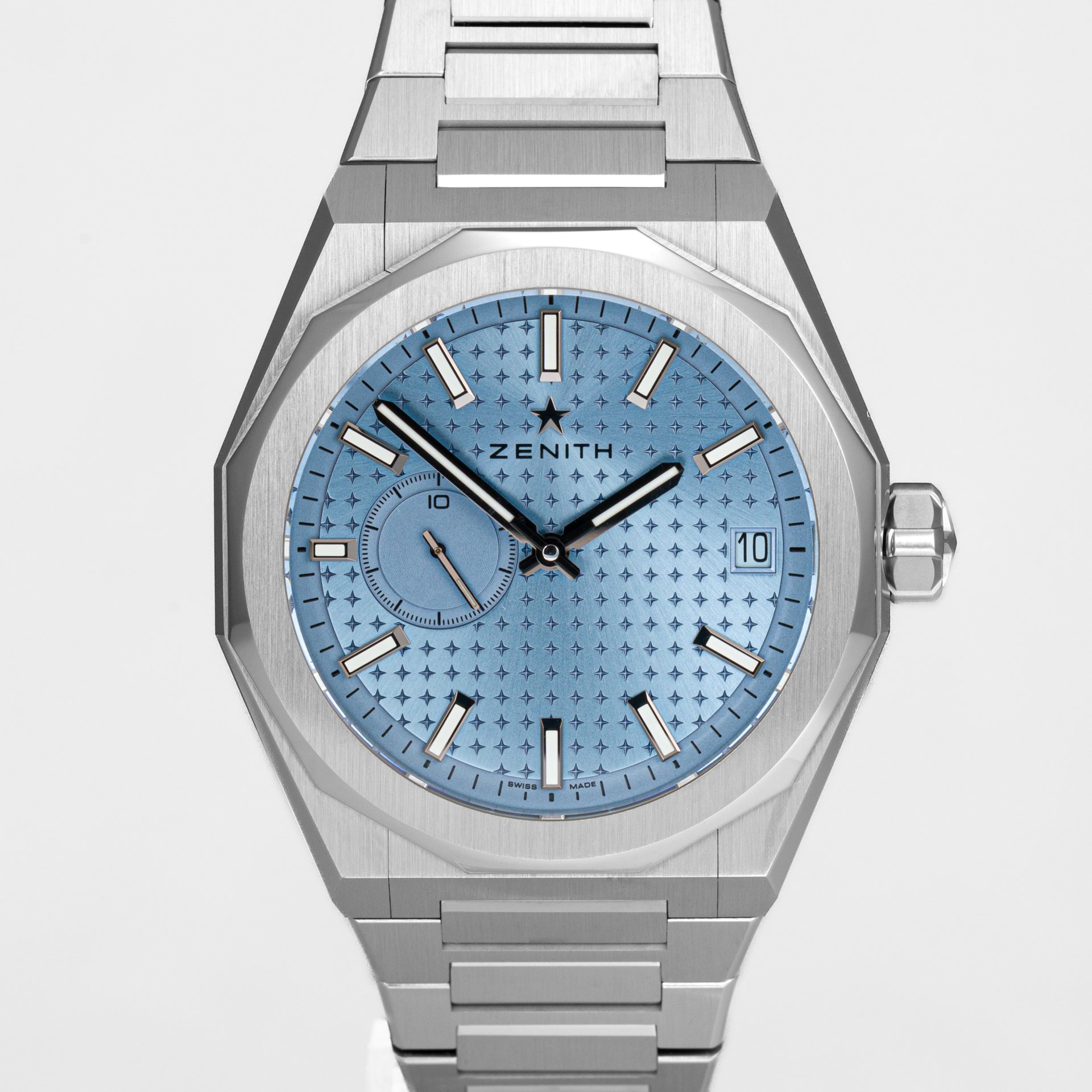
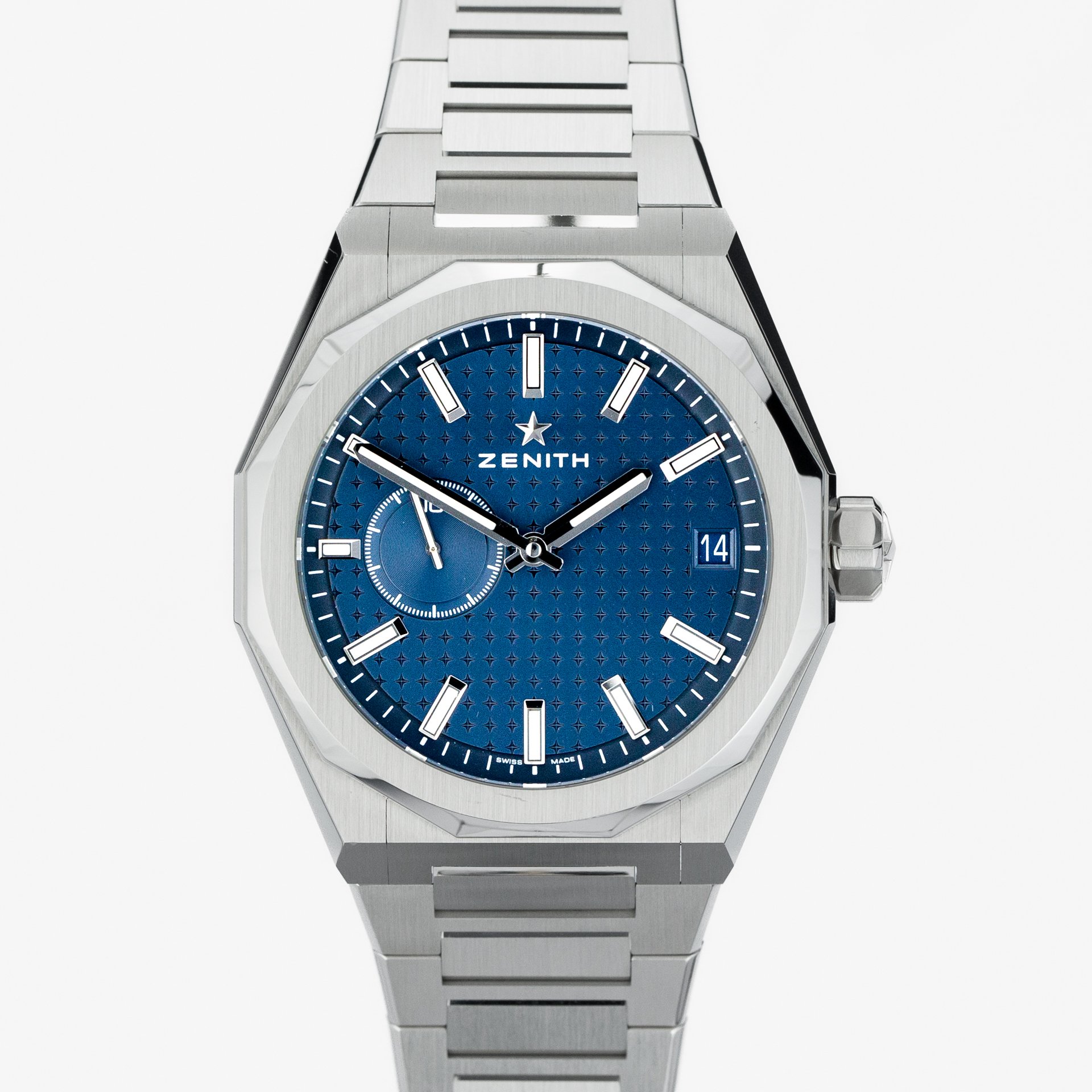
I cannot help but start with the dial, as it is the most impressive thing about this watch – here, for the first time, the so-called "metallic dial" is used with repeating four-pointed stars from the old Zenith logo. Its other distinctive feature is the shape of the case – the base is the one we already know from the Defy series, but the difference comes from the bezel – it is octagonal and this is another sign that the brand is trying with this series to enter "the big leagues". The next proof of the previous statement is the bracelet – it is of the newest design, semi-integrated and with a quick-change system (again for the first time on Zenith's steel watches). Again, the new crown was made especially for this model – which is unlike any other.
And, of course, the movement – here, also for the first time, is integrated the new ElPrimero 3620 movement, based on the El Primero 3600 introduced last year (same architecture as the 3600, but with the chronograph function removed) – an in-house caliber, operating at 36,000 vibrations, with 35 jewels and a power reserve of 60 hours.
It has been confirmed by Zenith that due to the complexity and higher cost of production, the ceramic watches are made in much more limited series, and perhaps this is the additional reason for the model's significantly higher price compared to the steel versions.
The watch is truly wonderful and I sincerely hope that it will become a worthy part of a connoisseur and expert's collection, because such a fine example at such a reasonable price for such a series will be hard to find again.