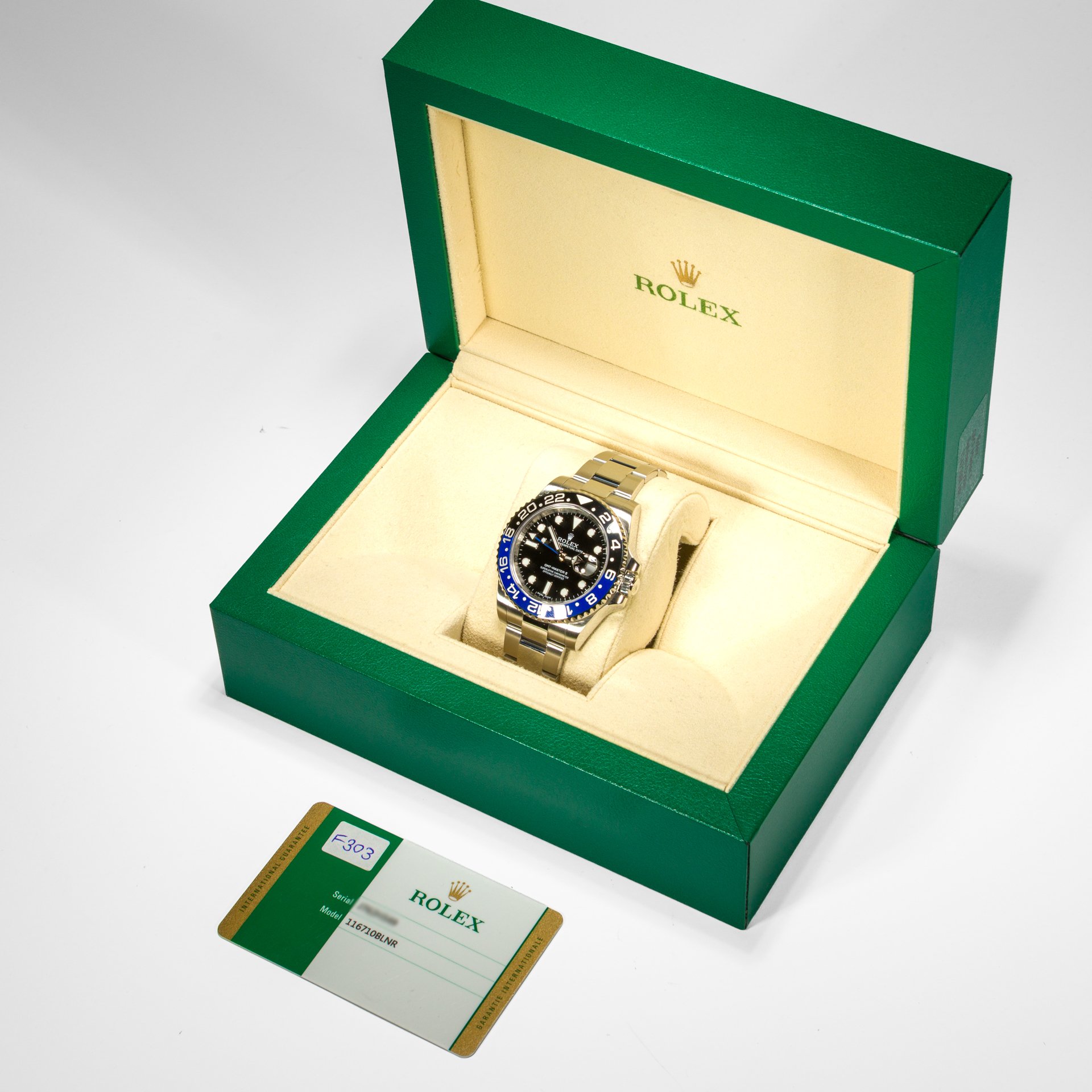
The Deepsea Sea-Dweller model was first presented at Baselworld in 2008, with its main purpose being to replace the highly successful Sea-Dweller. From the moment it was introduced, it strongly polarised the opinions of the brand’s supporters, and especially those of the “submariners”. Even more so – because with the launch of the DSSD, the brand announced that it was discontinuing the Sea-Dweller, most Rolex dealers placed much larger orders for this model, some several times larger, with the idea of meeting its potential future demand and, of course, profiting from its increasing price. Subsequently, Rolex realised that discontinuing the model had been a mistake, and in 2014 launched the new Sea-Dweller 4000, but that is another story.
The model presented today was launched in 2018 and is part of the brand’s new line of sports watches – with new calibres and other innovations, but we will focus on the differences between the current and previous versions a little further down in the text.
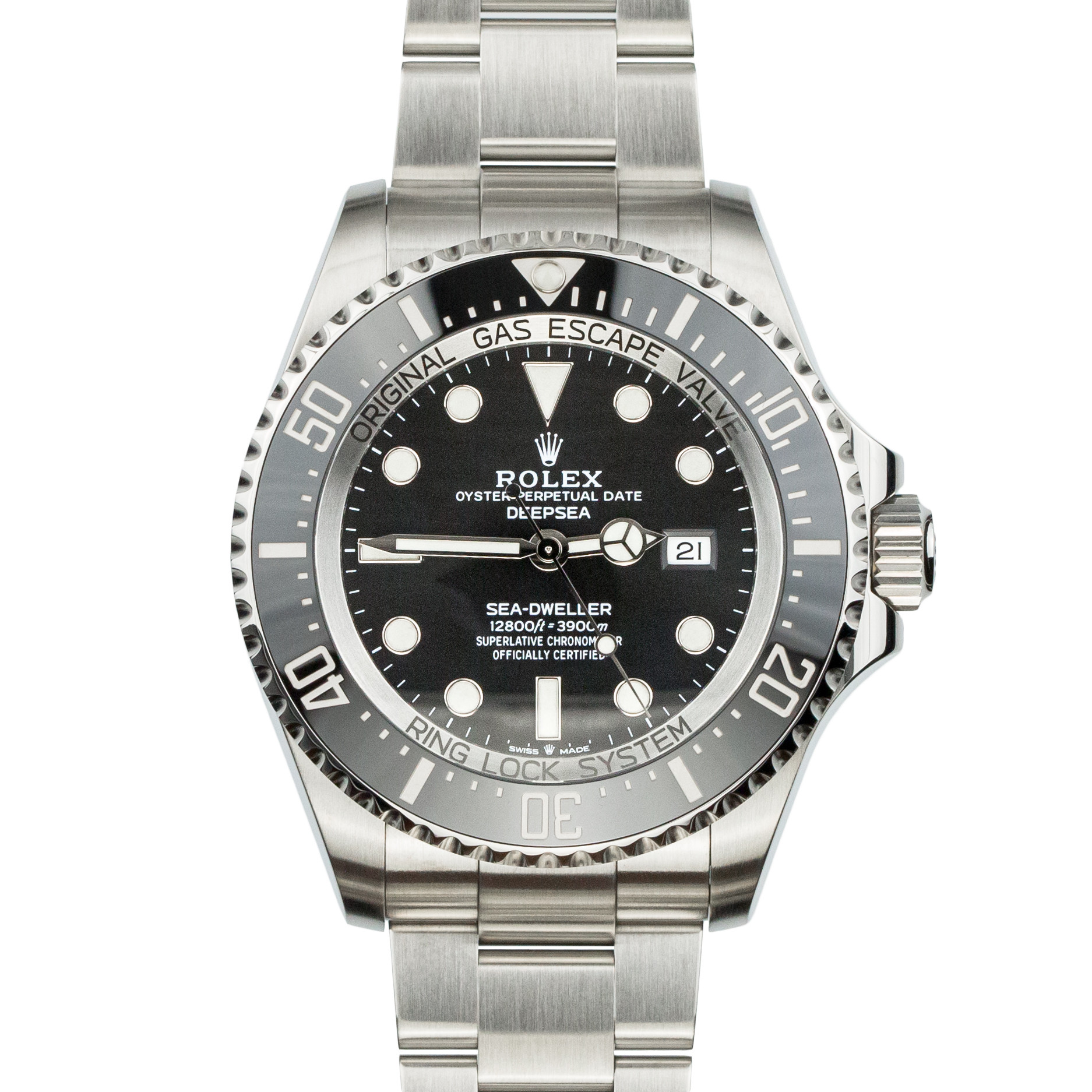
The DEEPSEA has a water resistance unique for this class of watches – 12,800 feet – and the inspiration for this model is the legendary Deep Sea Special, produced by Rolex back in 1960 to accompany a group of brave men who dared to reach the previously unattainable depth of 10,916 metres. The DEEPSEA, or DSSD, as this watch is also known, has an impressive diameter of 44 mm and a thickness of 18 mm – you will agree that there are not many Rolex models that come close to this “giant” in terms of dimensions.
Like the original Sea-Dweller, this one also has a unidirectional rotating bezel with 60-minute graduations, no “Cyclops” over the date, and a helium escape valve. What really distinguishes the DSSD from its predecessor, apart from the size, is, of course, the Ringlock system – a unique Rolex invention that allows this watch to reach such depths. This system consists of a 5 mm thick sapphire crystal, a steel ring in the middle and grade 5 titanium on the back of the case.
To ensure a 100-percent guarantee of water resistance for all watches of this model, Rolex invested in a special facility, designed with the help of COMEX, and tests every DSSD at a pressure corresponding to a water column of 16,000 feet – 25% above the guaranteed rating. The Ringlock system essentially “closes” more and more tightly as the pressure increases.
In 2012, director James Cameron became the first solo diver to reach the bottom of the Mariana Trench (Challenger Deep), the deepest part of the ocean, and the Rolex Deepsea proudly accompanied Cameron on this historic journey. In 2014, Cameron’s film about his historic descent to the bottom of the Mariana Trench was released, and its name was... “Deepsea Challenge”. To mark this event in a fitting way, Rolex released a shorter series of this watch, namely the D-Blue.
The dial of the watch is very clean and easy to read, while the luminescence of the hands and indexes makes it easy to use at night as well. The model is one of the first in which Rolex replaced the green colour of the luminescence with blue, which has been proven to be much more pleasant and harmless to the human eye, while the so-called Chromalight used by Rolex allows the indexes to appear milky white during the day. Here Rolex also uses the so-called “Maxi dial” style, launched precisely with this model together with the GMT II, through which the manufacturer increased the size of the hands and markers – yet another reason why we like this model so much.
For the caseback, Rolex uses a plain solid back, as it does in all its models – in the case of the DSSD, it is made of titanium, while on its polished outer ring it proudly bears the full name of the model: “ROLEX OYSTER DEEPSEA SEA-DWELLER 12800 ft = 3900 m”. As we all know, Rolex uses noble 904L steel for its watches – the difference compared with the 316L steel commonly used by other brands lies in its greater resistance, especially to salt water. It is widely known that Rolex can be called fanatics when it comes to the steel they use – a large part of the metallurgical processes are carried out in-house in order to guarantee consistent quality of the raw material. Many watches have passed through our hands, but we can say absolutely categorically that few brands devote so much attention and effort to the quality of the final product from the point of view of case finishing – and as a result, the outcome cannot be anything other than unique quality and presence.
So, what are the real differences between the new and the previous version? The first significant difference is the movement – the new Sea-Dweller has the honour of carrying the new calibre 3235, which has an increased power reserve of 70 hours and a seriously improved automatic winding system, in which the rotor is now mounted on a bearing and its efficiency has been increased by 15%. As for lubrication, the reversing wheels, one of the problematic areas from the point of view of friction, have a Teflon coating. The new 3235 contains 14 built-in patents and more than 90% new components, and is also twice as accurate as the requirements for an official COSC chronometer.
The most visible difference is the wider bracelet with its larger folding clasp. As a result of this change, the proportions feel more harmonious, as the previous “protrusion” of the lugs relative to the bracelet is gone. The end links of the bracelet no longer rise above the lugs – something that, to us, was difficult to understand in the previous version. Overall, the bracelet has been redesigned to be more flexible and comfortable.
Rolex also took care of some smaller details: a small Rolex crown placed at the edge of the dial at “6 o’clock” between the words “Swiss” and “made”; the gap between the case and the bezel has been reduced, limiting the amount of dirt that can enter the watch; the bezel “pip” no longer protrudes as much and is therefore less susceptible to damage.
For many years, the Sea-Dweller has been offered with a three-piece steel bracelet with a profile tapering towards the clasp – with this model, the tradition has been preserved, and from this point of view the bracelet remains just as comfortable. Where is the difference compared with previous generations? Mainly in the clasp – the new DSSD is equipped with a clasp with a micro-adjustment system called Glidelock. The idea is that you can adjust the size of the bracelet by a few millimetres on the go. We all know that our wrists change size depending on the weather, humidity, temperature and so on – well, the guys from Rolex offer the perfect solution for such cases, and the fact that the clasp is also equipped with a Diver extension, allowing an additional extension of 26 mm, makes it even more functional. It is important to know that this Glidelock system is offered only with the Submariner and Deepsea – another major plus for this model. The other fact that must definitely be noted is that the clasp is made from a steel block, cut to the required shape, and not from a bent steel sheet – we believe that, apart from Rolex, only two other brands do this.