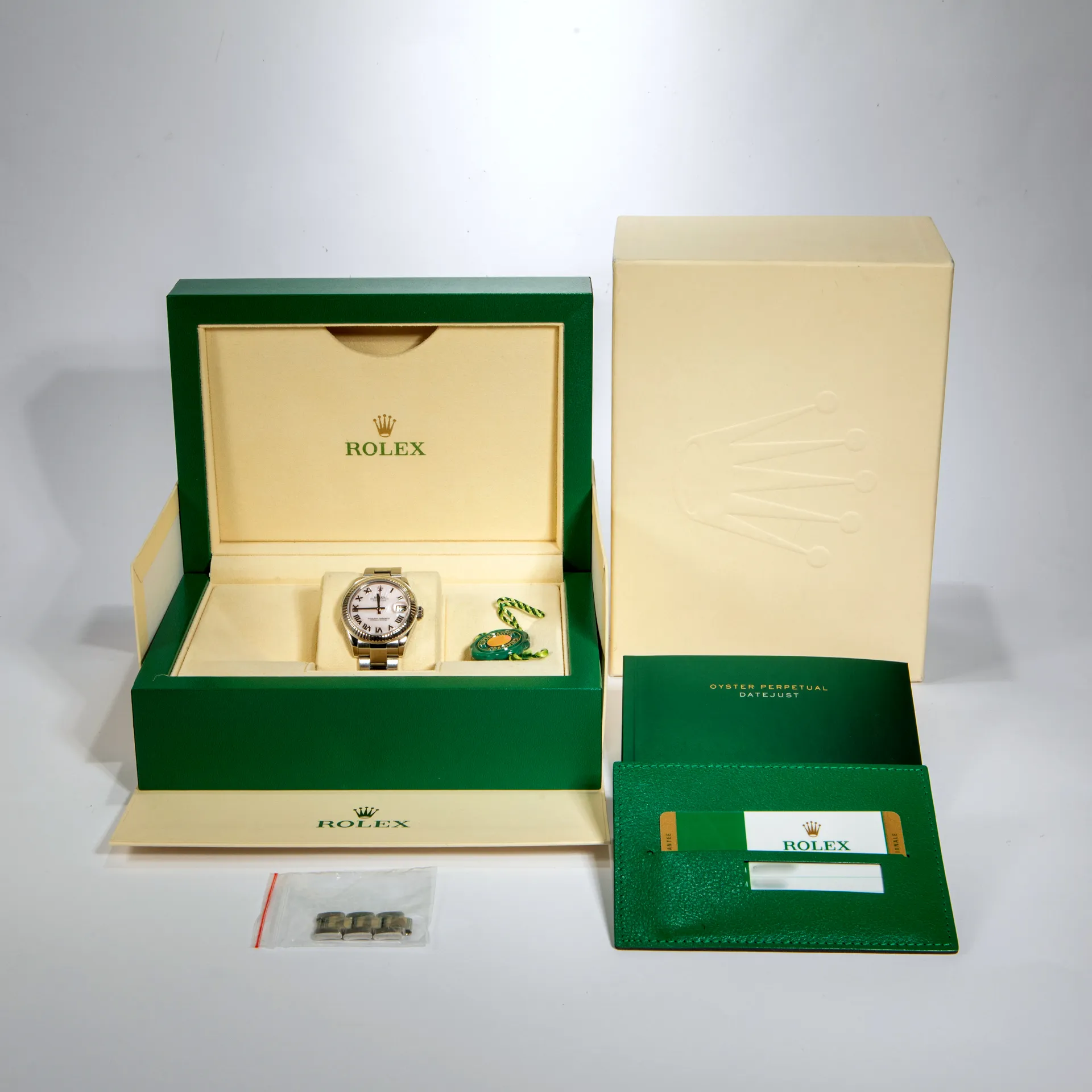
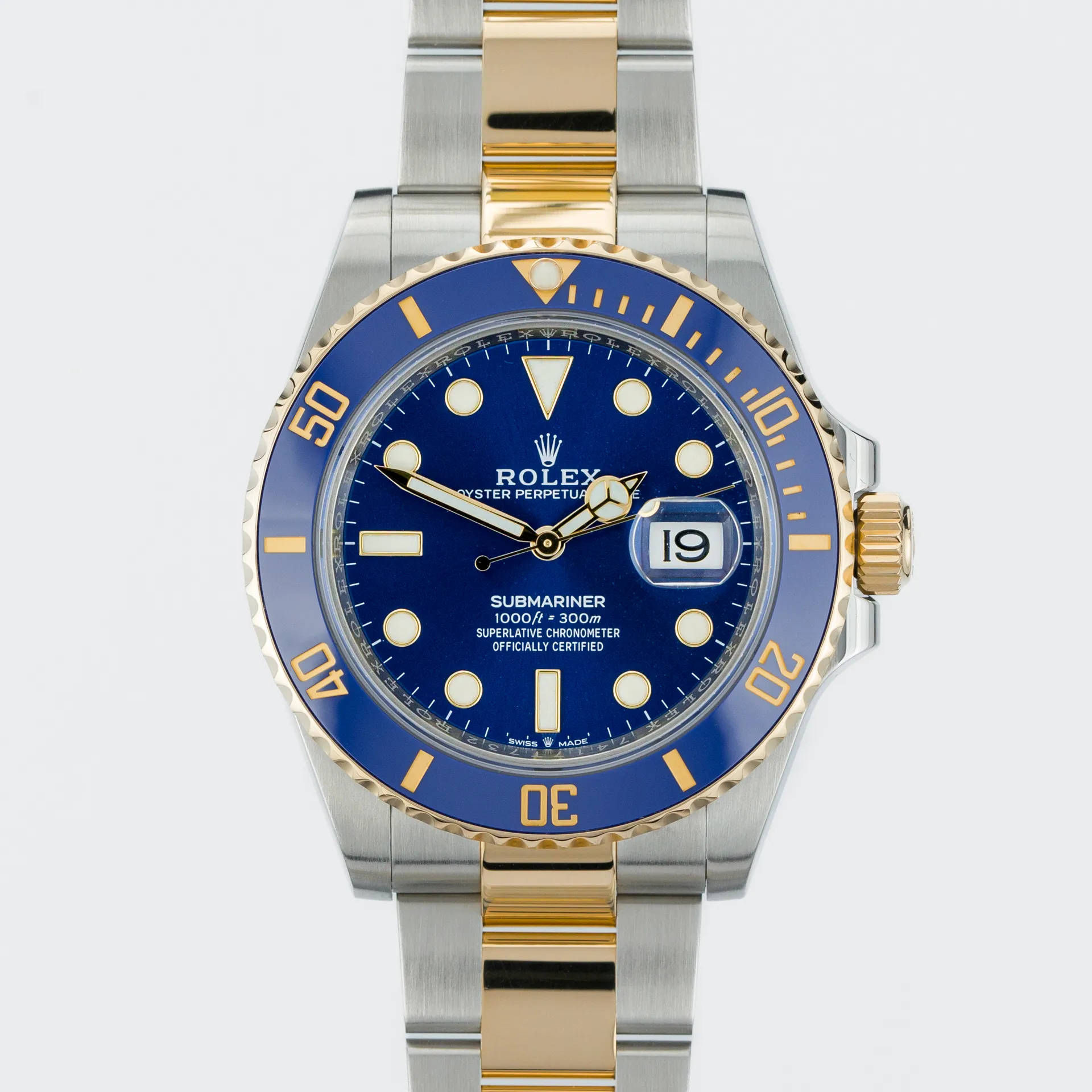
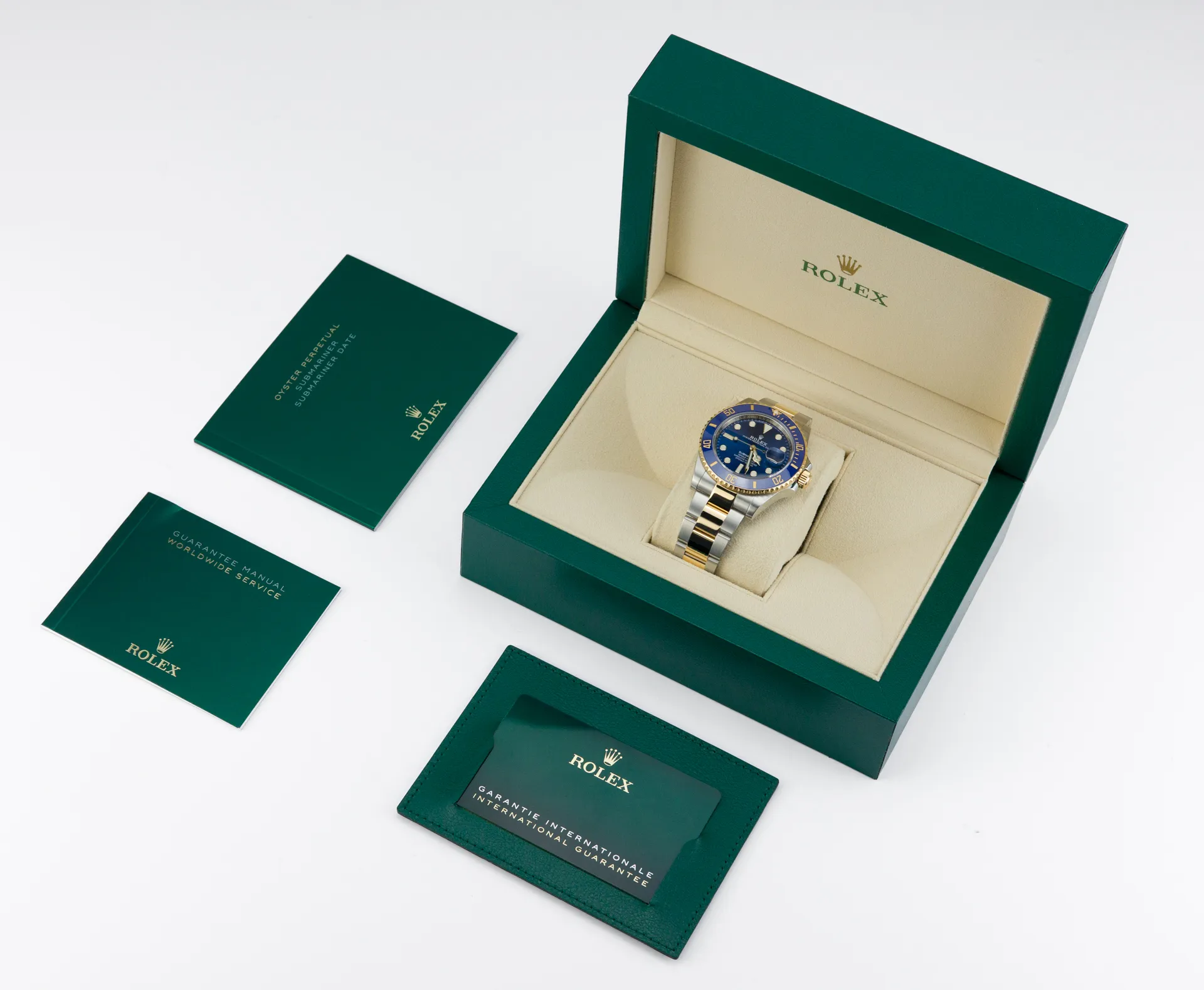
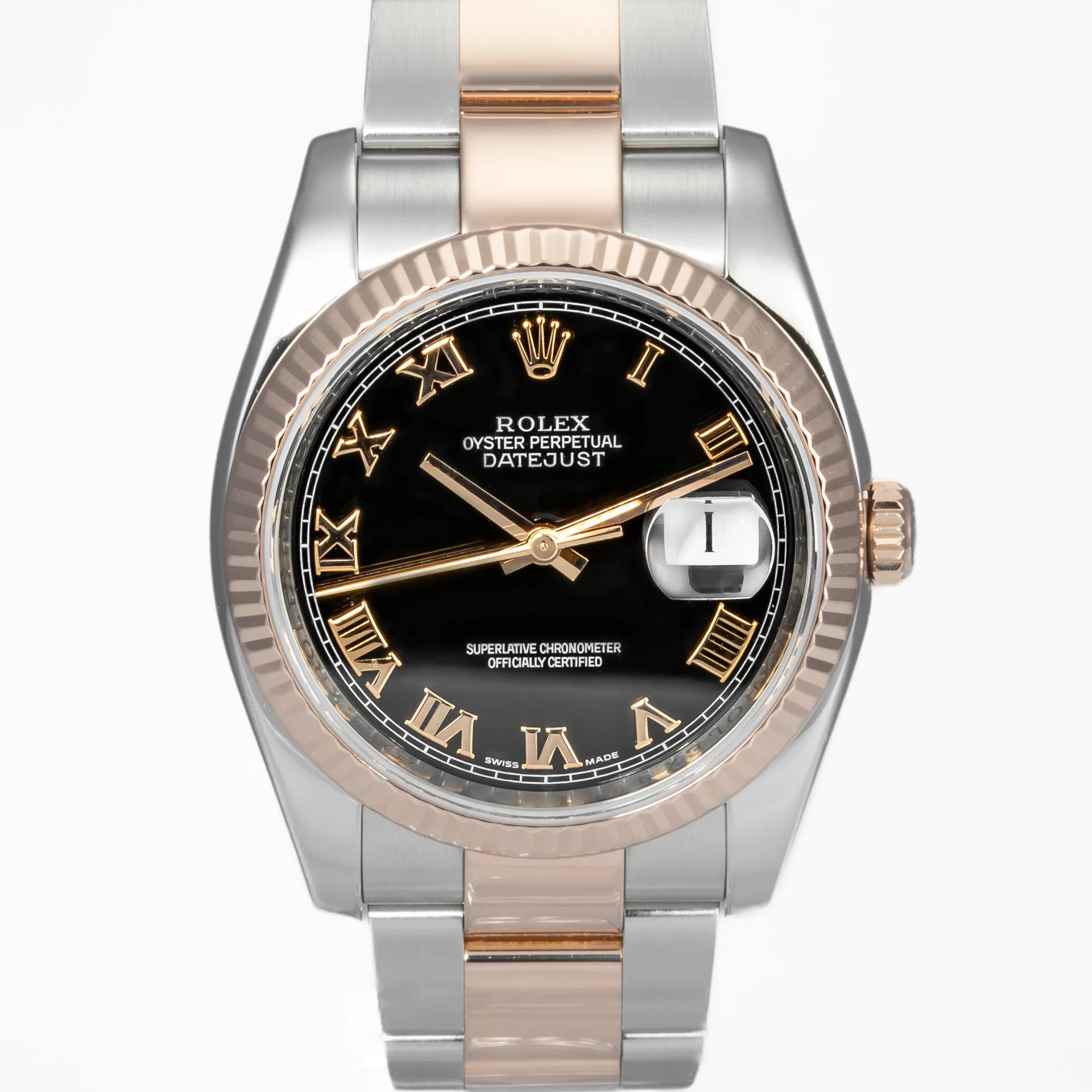
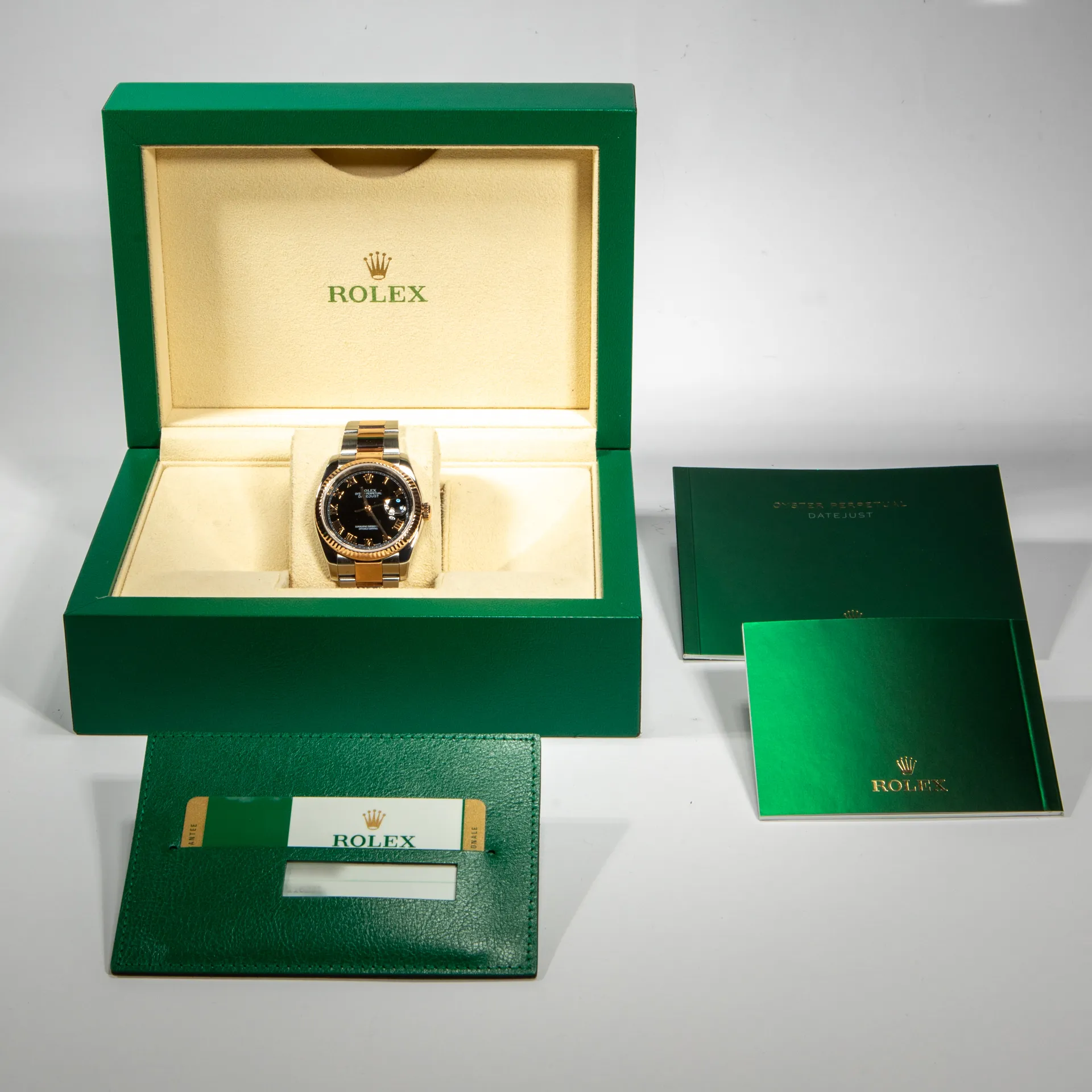
When the first Rolex Datejust was presented in 1945 – the year of the brand’s 40th anniversary – it entered history as the first automatic, water-resistant, certified chronometer with a date on the dial. The “Cyclops” was added in 1955 to visually magnify the date two and a half times, making the indication more legible and clear, and this feature became one of the most recognisable hallmarks of Rolex in general.
In 2009, Rolex introduced the Rolex Datejust II. This line of watches offers the characteristics of the original and iconic Rolex Datejust in a more streamlined and modern design and includes new innovations. One of the most significant differences between the Rolex Datejust and the Rolex Datejust II is, of course, the size – the new one is 41 mm, significantly larger and following the trend towards larger watch cases. The other difference is the movement – the Datejust II has the honour of carrying the calibre 3136, made by the brand exclusively for this model – an in-house movement with Paraflex anti-shock protection, Parachrom hairspring, COSC-certified chronometer status, a 48-hour power reserve and a frequency of 28,800 vibrations per hour.
In 2017, the brand also presented the newest version of the model under the reference 1263xx. One of the biggest changes is precisely the movement – the new calibre 3235, which has an increased power reserve of 70 hours and a seriously improved automatic winding system, in which the rotor is now mounted on a bearing and its efficiency has been increased by 15%. As for lubrication, the reversing wheels, one of the problematic areas from the point of view of friction, have a Teflon coating. The new 3235 contains 14 built-in patents and more than 90% new components, and is also twice as accurate as the official COSC chronometer.
It is no coincidence that the Datejust is the most popular and recognisable model of the brand after the cult Submariner – and the Datejust II allows this popularity to be presented in a contemporary interpretation.
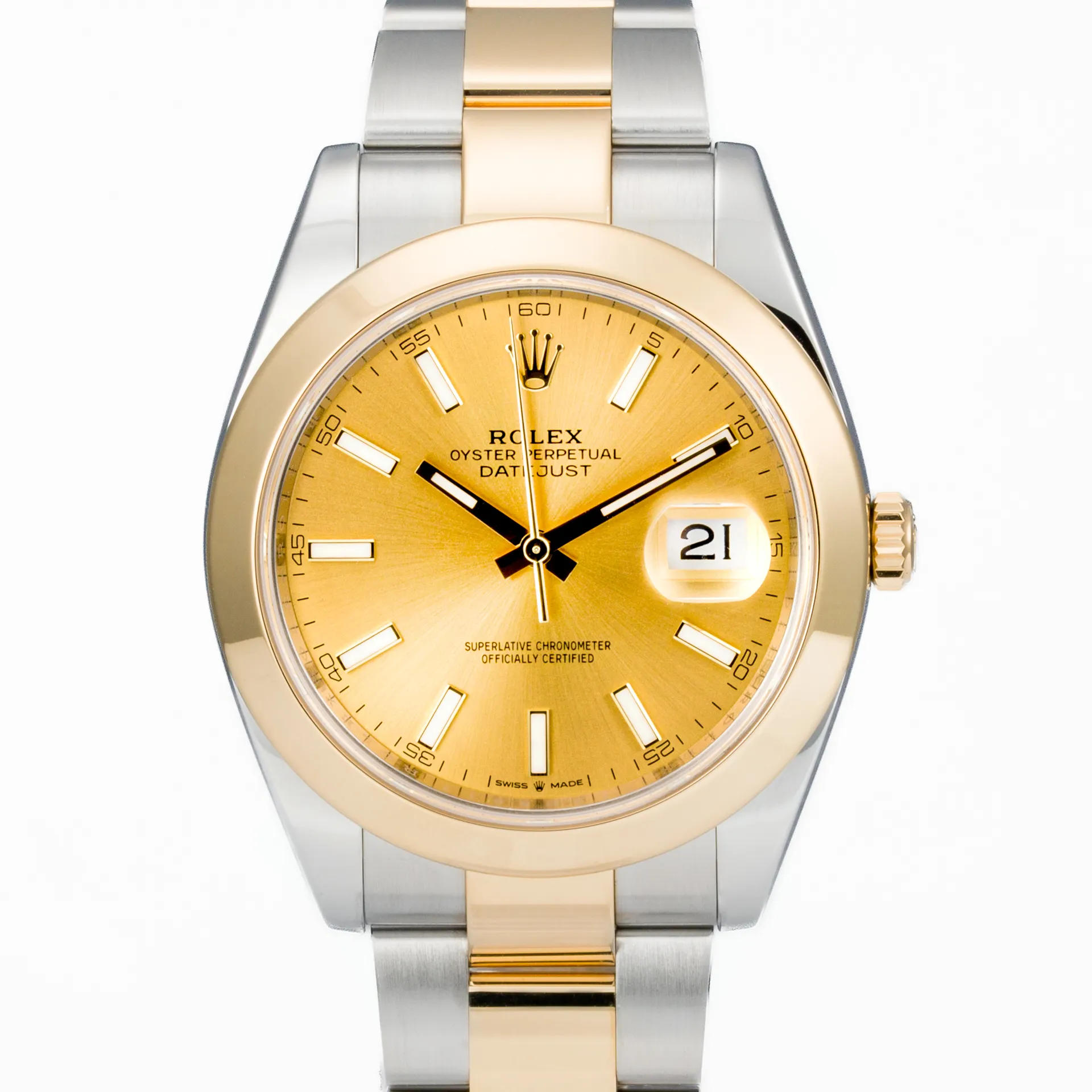
This particular watch comes in a fantastic and relatively hard-to-find combination – a Champagne dial with luminous hour markers. The detail of this watch is truly impressive, as it is with all modern Rolex watches we have had the opportunity to present. Starting with the incredible dial, which is in fact golden, and moving on to the famous sapphire crystal with “Cyclops” – in this case, the highest class of sapphire crystals of the brand has been used, which has allowed the overall height of the watch to be reduced compared with its predecessors.
Of course, special attention should be paid to the case and bezel – an incredible combination of top-grade brushed 904L steel with 18-carat yellow gold. As you know, Rolex pays special attention to the steel it uses and, for this purpose, has its own foundries for producing all its alloys. The bezel is the rare “smooth” type for the brand’s bi-metal versions, giving the watch an incredible presence and harmonising very well with the Oyster bracelet. The watch has a killer presence on the wrist, and the fact that the bezel is made of 18-carat gold further reinforces the overall impression.
And, of course – the bracelet, band, chain, or whatever you prefer to call it. As one would expect from a Rolex, it is truly good. In this case, we are talking about the new Oyster bracelet with a solid 18-carat gold centre link and a massive clasp, made from a solid piece of steel rather than from bent sheet metal, as is the case with most brands.