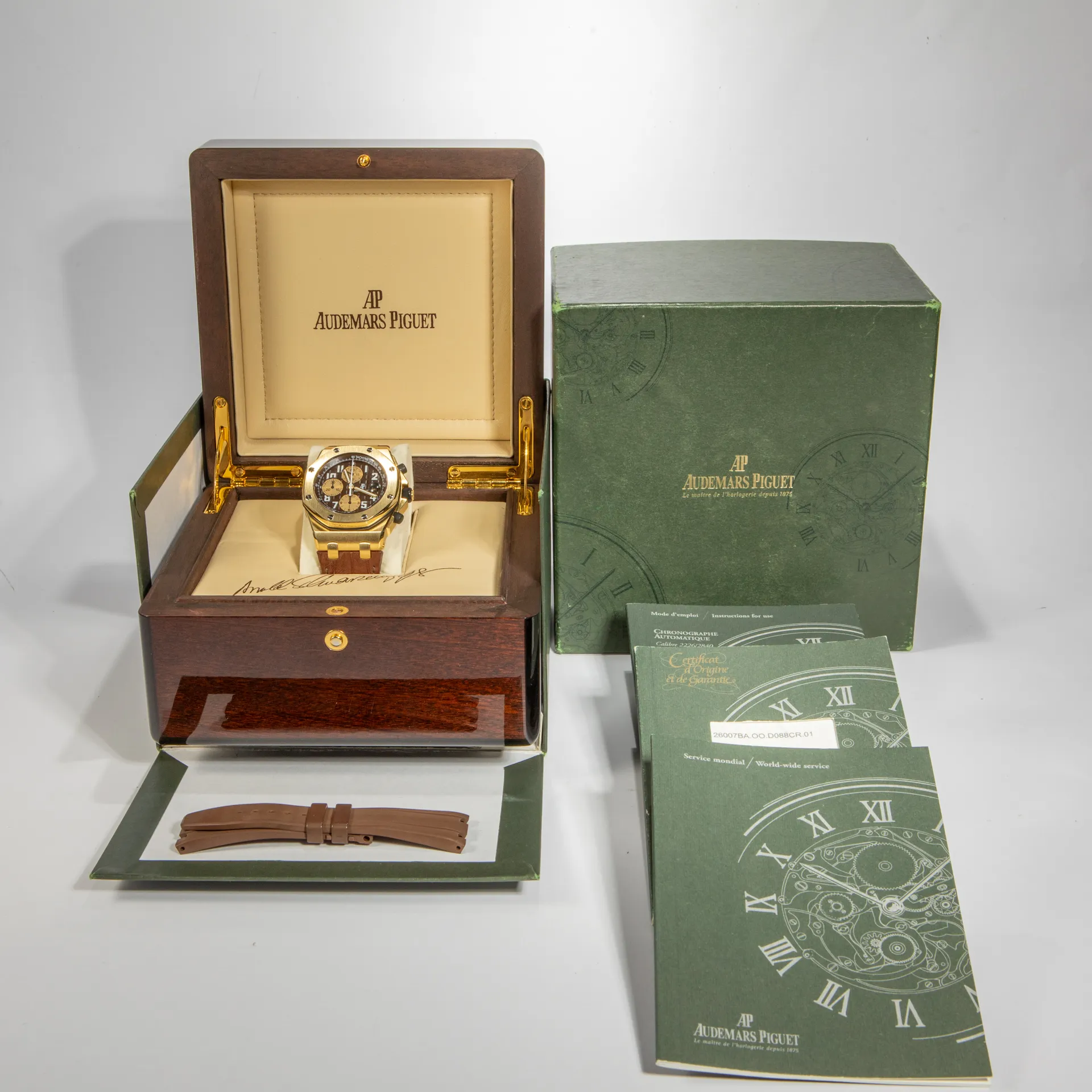
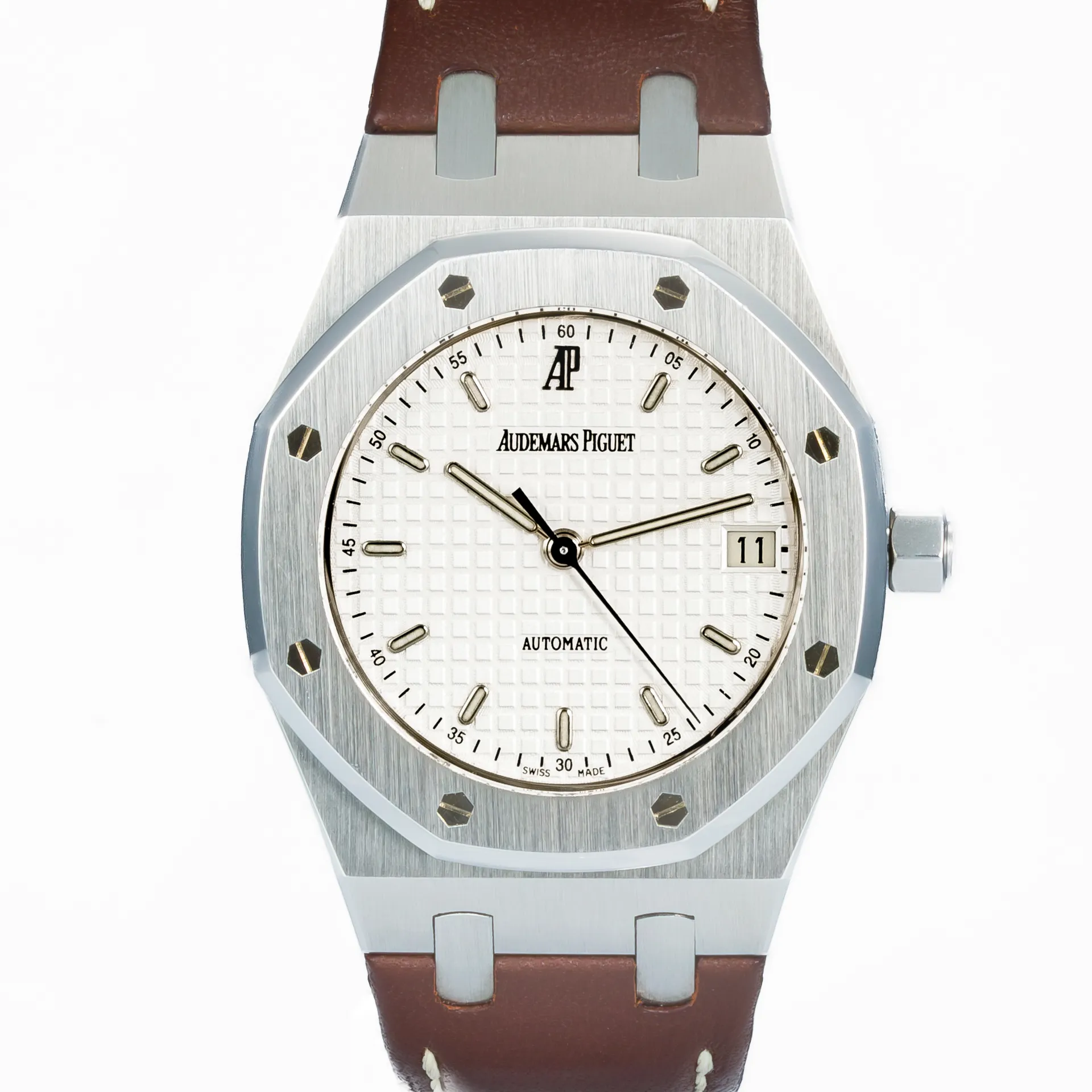
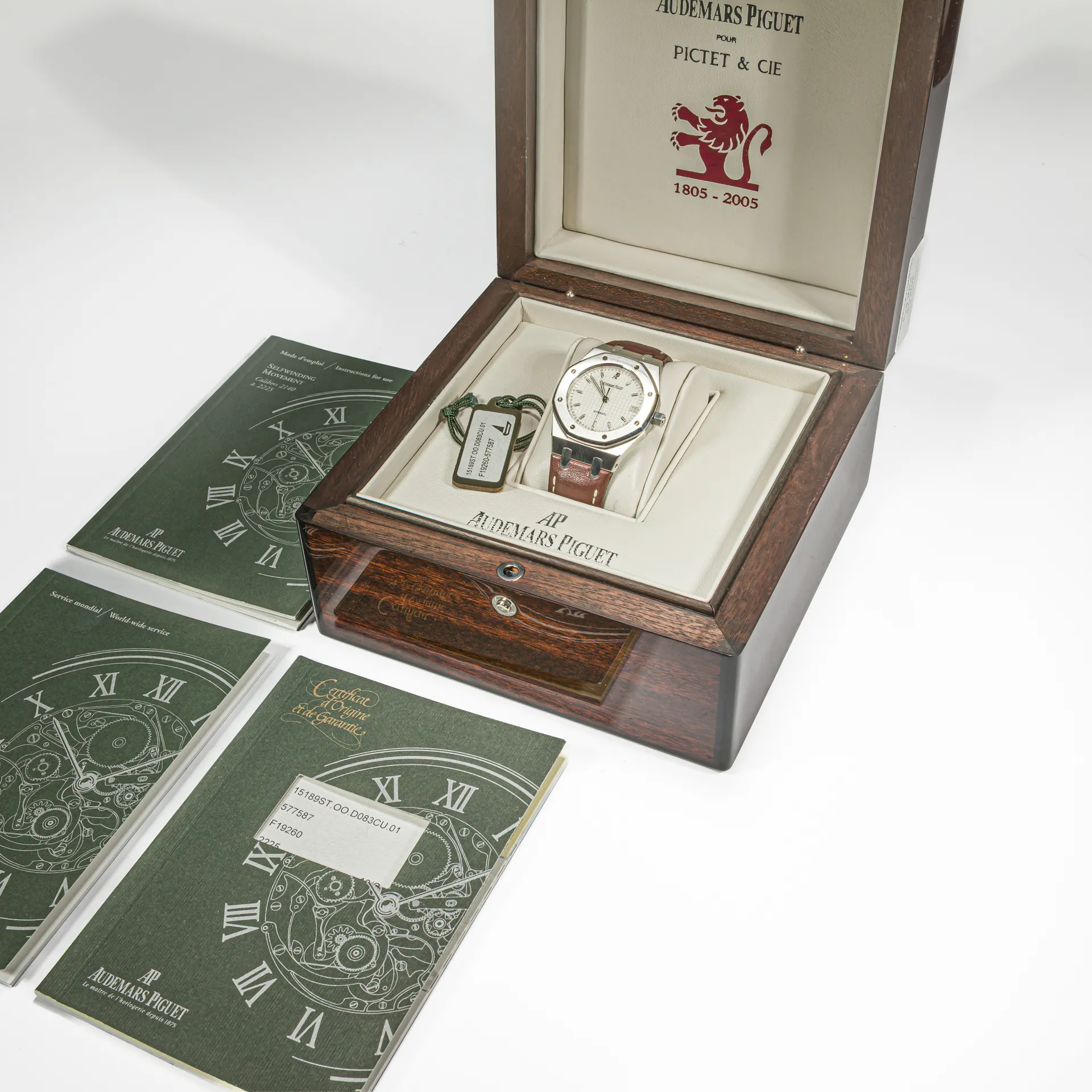
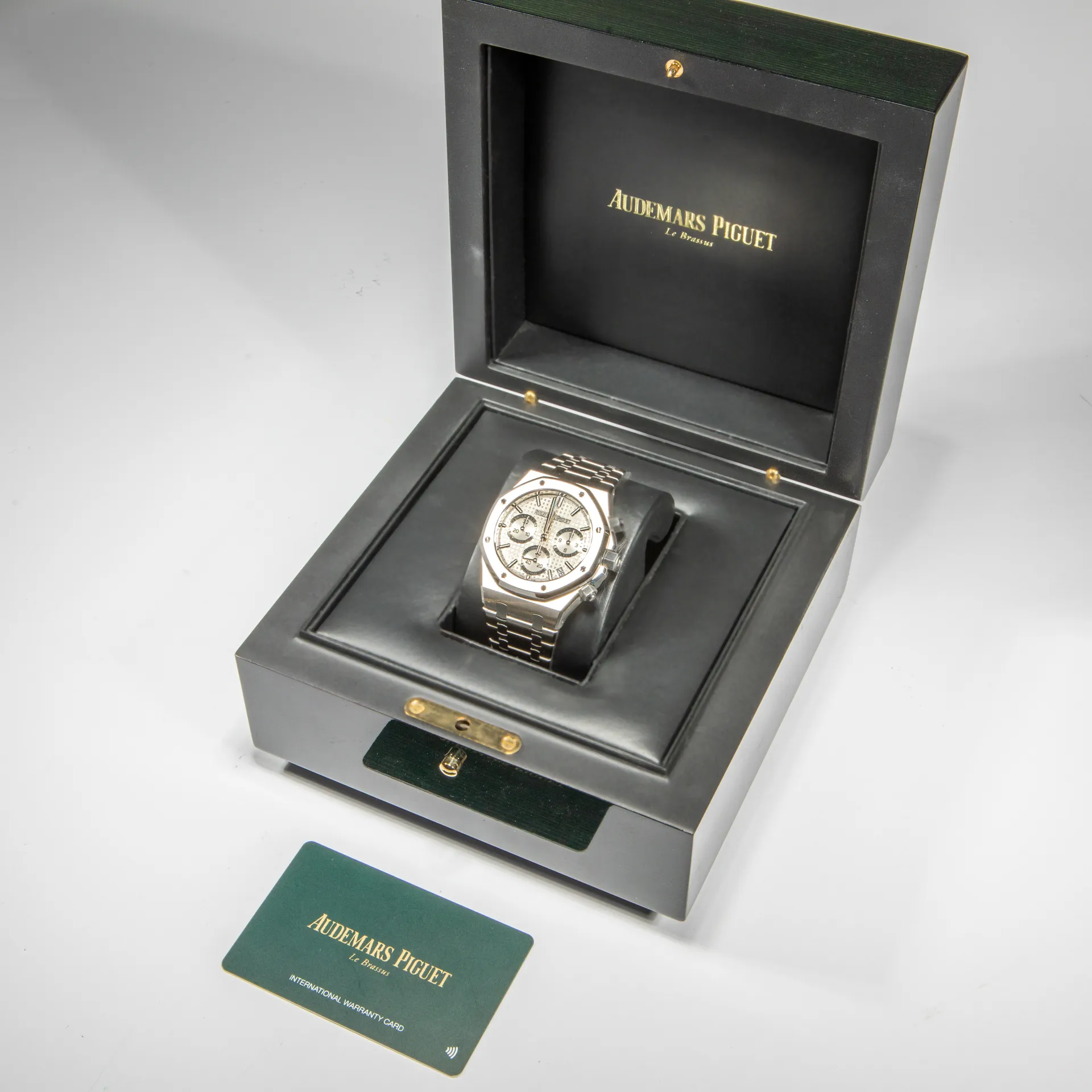
For us, and probably for many other watchmaking enthusiasts, the Royal Oak is the most emblematic model of Audemars Piguet — and the reasons for this are countless. Created in the early 1970s by the legendary designer Gérald Genta, over the decades the series has undergone numerous interpretations, but several of its key characteristics remain unchanged: the octagonal bezel, the dial with its characteristic “Tapisserie” pattern, the integrated design of the case and bracelet, and, of course, the unique silhouette.
In 1993, Audemars Piguet introduced the Royal Oak Offshore — a more massive, sportier, and significantly bolder interpretation of the original Royal Oak. With its 42-millimeter case, the model looked extremely impressive for the standards of the time and started the trend towards larger and more assertively expressed sports watches.
At the beginning of the new millennium, the brand took another bold step. In 2001, the first Royal Oak Offshore with a bezel covered in vulcanized rubber was introduced. Besides the bezel, the material was also used on the crown and the chronograph pushers. The decision was revolutionary for its time and quickly won many admirers, turning the so-called “Rubber Clad” models into some of the most recognizable representatives of the collection.
The watch presented today is special, and the reason for this is noticeable at first glance — the combination of materials used. The case of reference 25940OK is crafted from solid 18-karat rose gold, while the bezel, crown, and pushers are covered with black vulcanized rubber. The contrast between the precious metal, the grey dial, and the black subdials gives the watch a simultaneously luxurious, sporty, and slightly aggressive look.
This configuration is relatively rare and hard to find, and its success over the years has created a serious group of loyal admirers. It is for this reason that in 2021, Audemars Piguet revived the concept with reference 26238OK — again with a 42-millimeter rose gold case, a rubber-clad bezel, and a similar color combination.
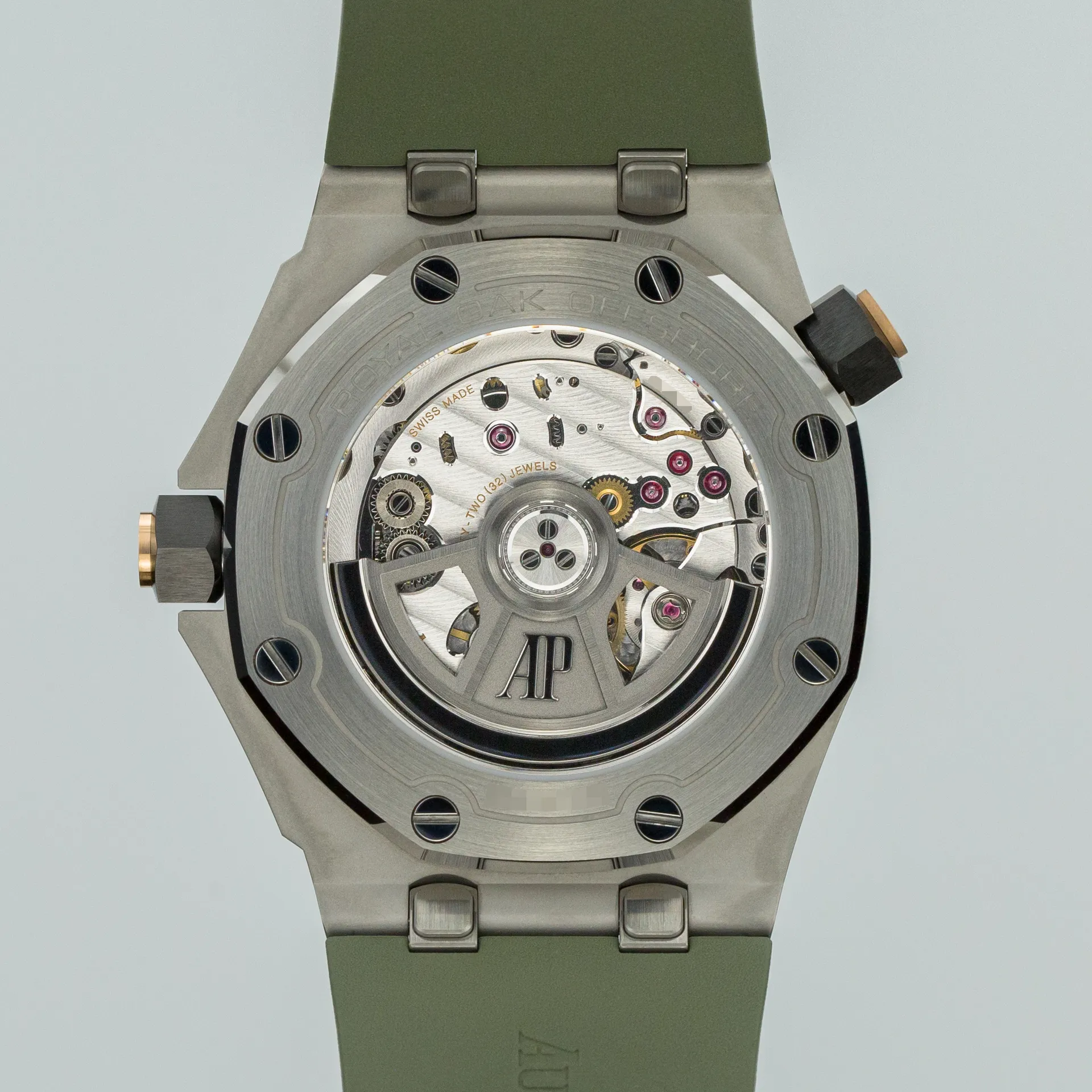
The automatic caliber AP 2326/2840 operates within the case of the presented model. It combines a base movement produced by Jaeger-LeCoultre with a chronograph module by Dubois Dépraz. The movement operates at a frequency of 28,800 vibrations per hour, has 50 jewels, and provides a power reserve of approximately 38 hours.
Although a large part of the Royal Oak Offshore models subsequently transitioned to the newer caliber 3126/3840, reference 25940OK retained the 2326/2840 movement throughout its entire production period. This makes it not only one of the most characteristic versions of the Offshore from its generation, but also a unique representative of the last era of models based on the proven movements of Jaeger-LeCoultre.