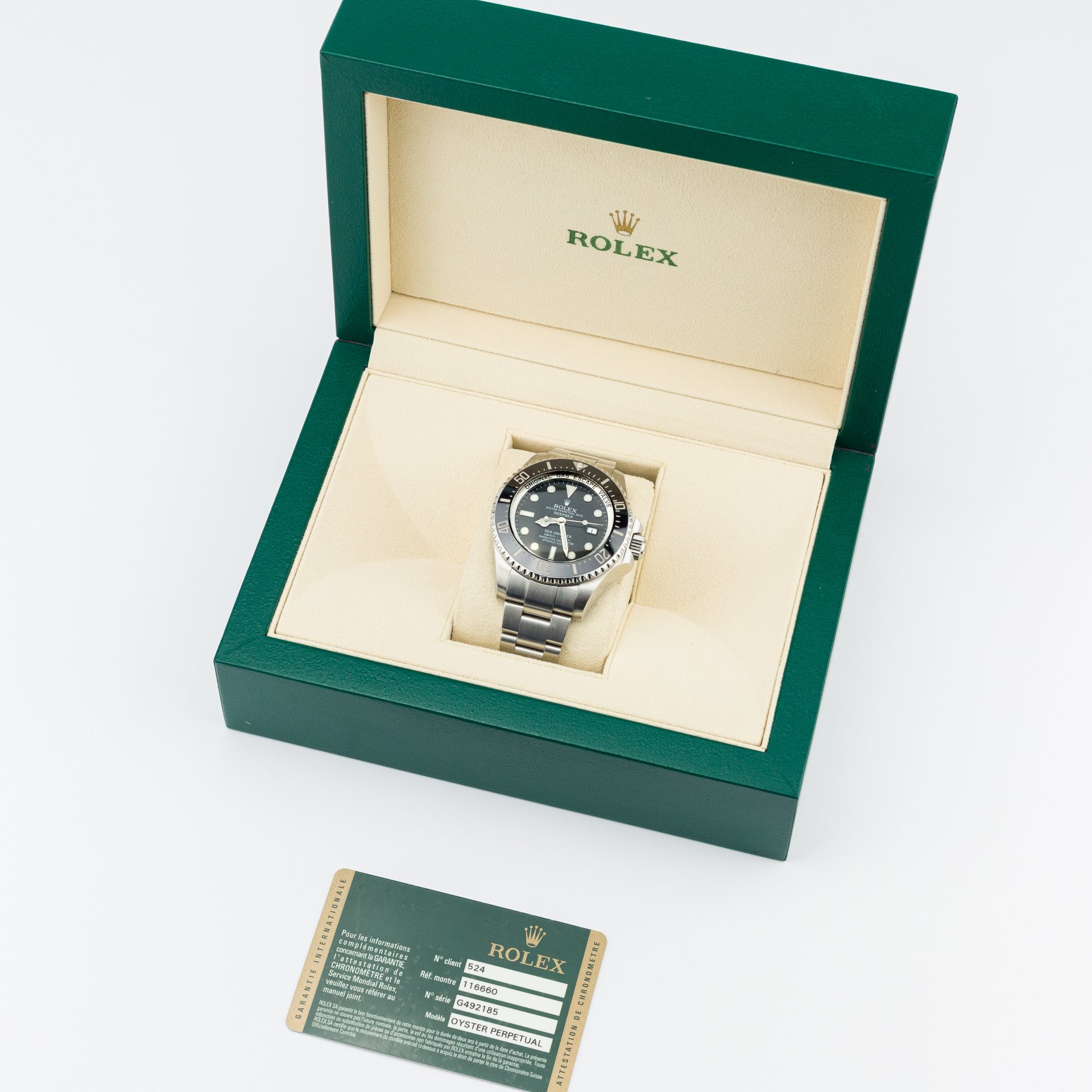
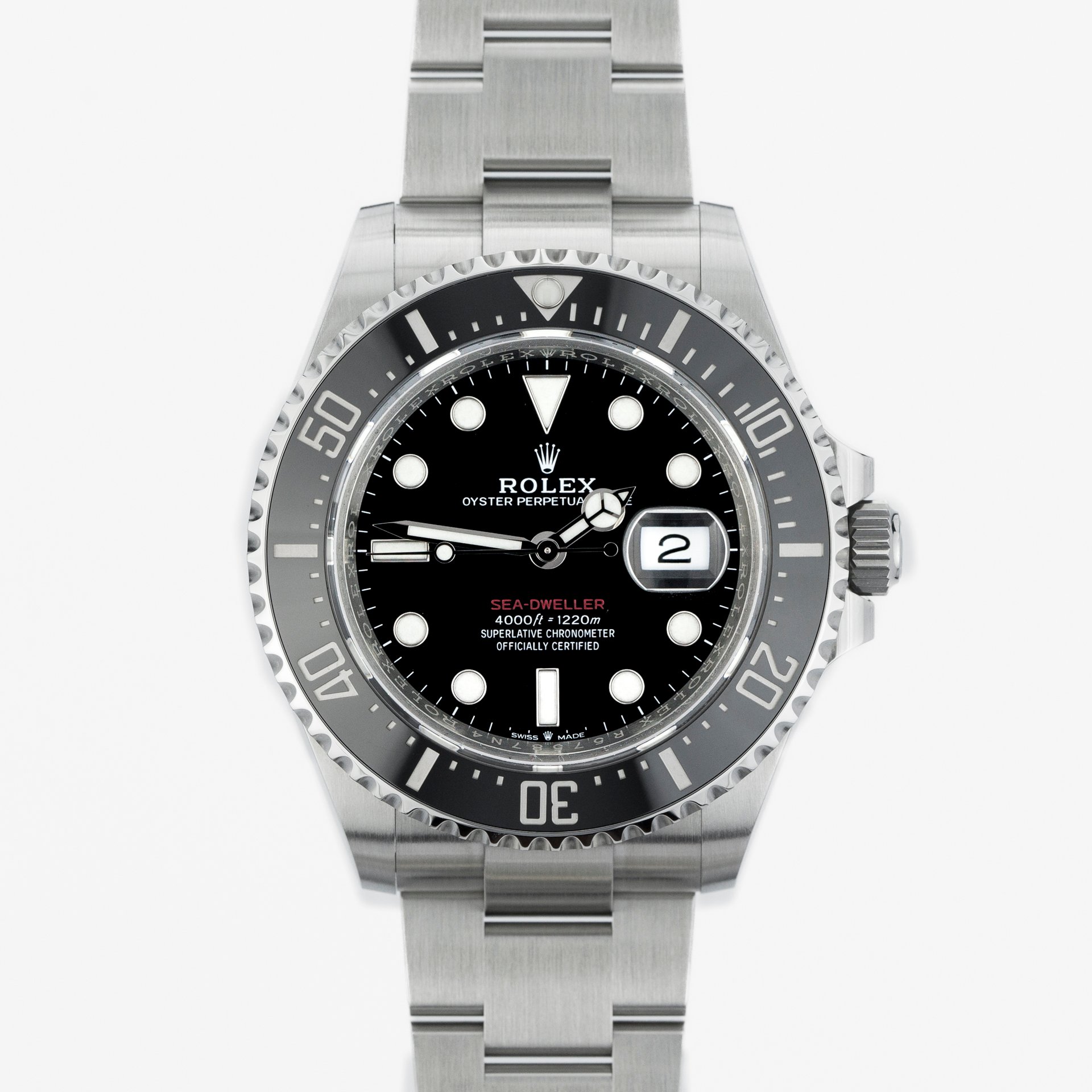
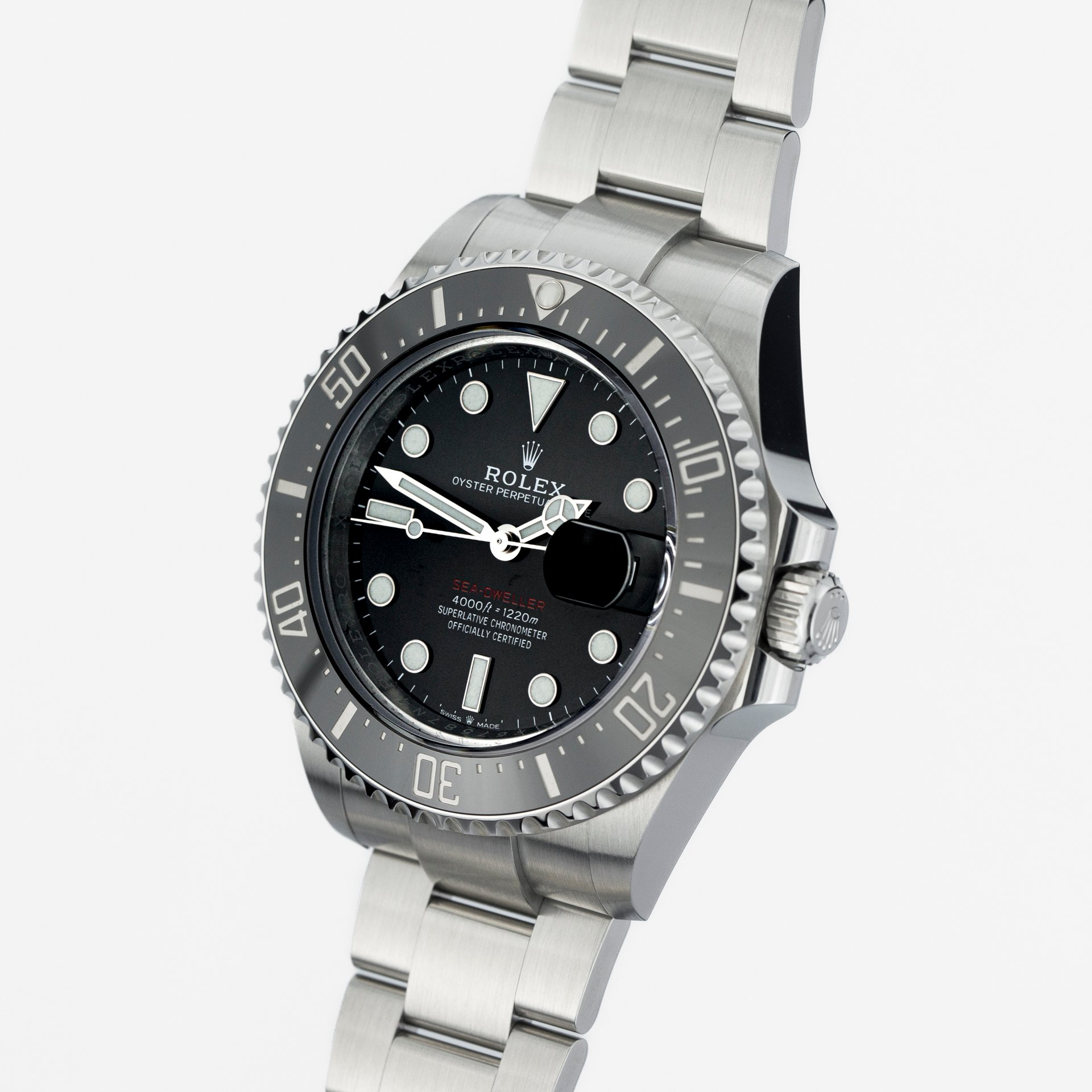
The Rolex Deepsea Sea-Dweller was first introduced at Baselworld in 2008, with its main purpose being to replace the exceptionally successful Sea-Dweller. From its very debut, the model strongly polarized the opinions of Rolex enthusiasts and dive watch lovers. Additional tension was created by the fact that with the launch of the DSSD, production of the Sea-Dweller was discontinued, which led dealers to place significantly larger orders in anticipation of a future shortage. Subsequently, Rolex reconsidered their decision and in 2014 introduced the new Sea-Dweller 4000.
The model presented today is from 2018 and is part of the brand's new generation of sports watches – with updated calibers and a number of improvements.
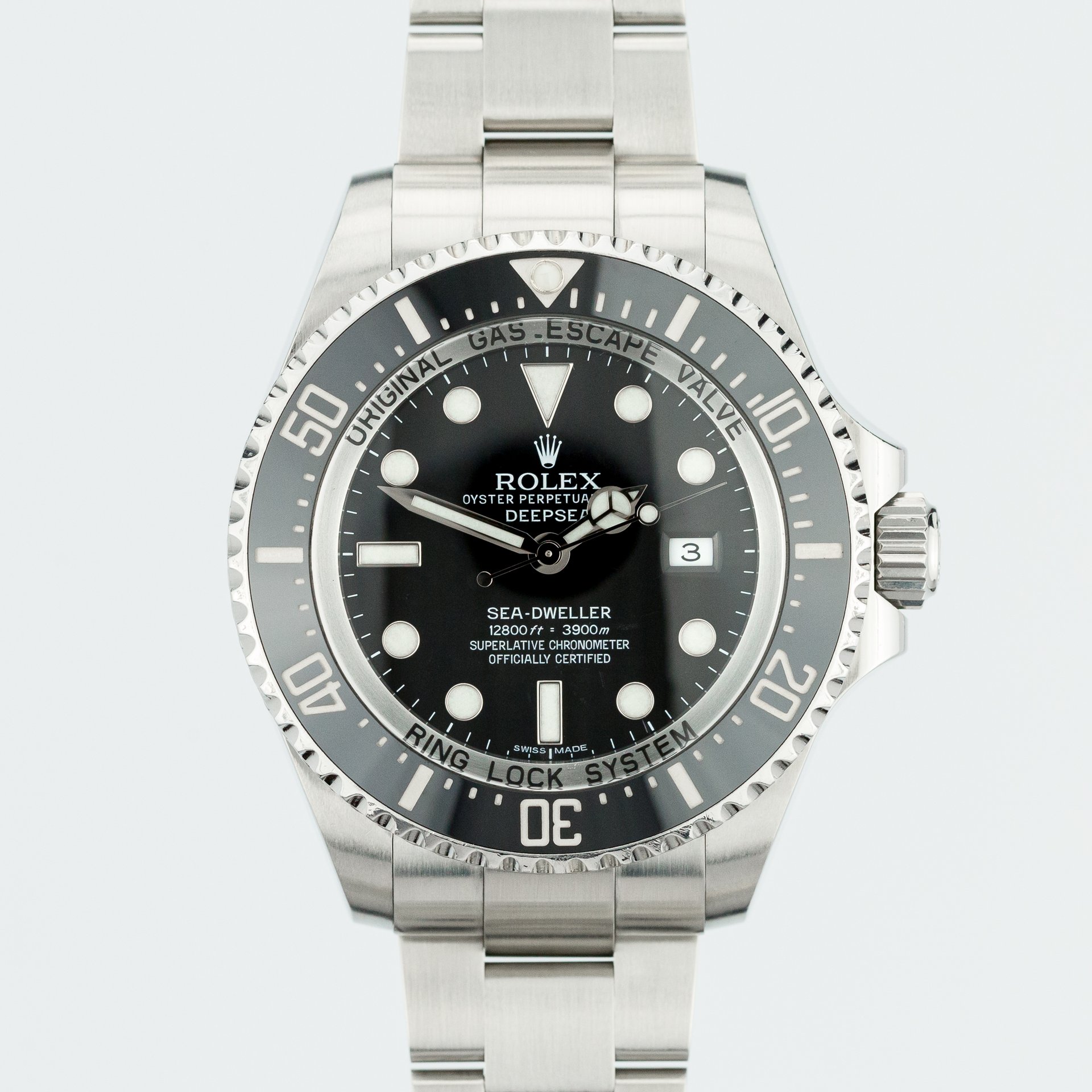
The DEEPSEA impresses with a water resistance of up to 12,800 feet (3900 m) – an achievement inspired by the legendary Rolex Deep Sea Special, created in 1960 for an expedition to a depth of 10,916 meters. With a diameter of 44 mm and a thickness of 18 mm, this model is one of the most massive in Rolex's portfolio. As with the classic Sea-Dweller, it features a unidirectional rotating bezel, the absence of a "Cyclops" lens over the date, and a helium escape valve.
The most significant difference, however, is the Ringlock system – an innovative construction that allows for exceptional pressure resistance. It includes a 5 mm thick sapphire crystal, an inner steel ring, and a case back made of Grade 5 titanium. To ensure reliability, Rolex tests each watch at a pressure corresponding to 16,000 feet – 25% above the official rating. As the pressure increases, the system "tightens" even further.
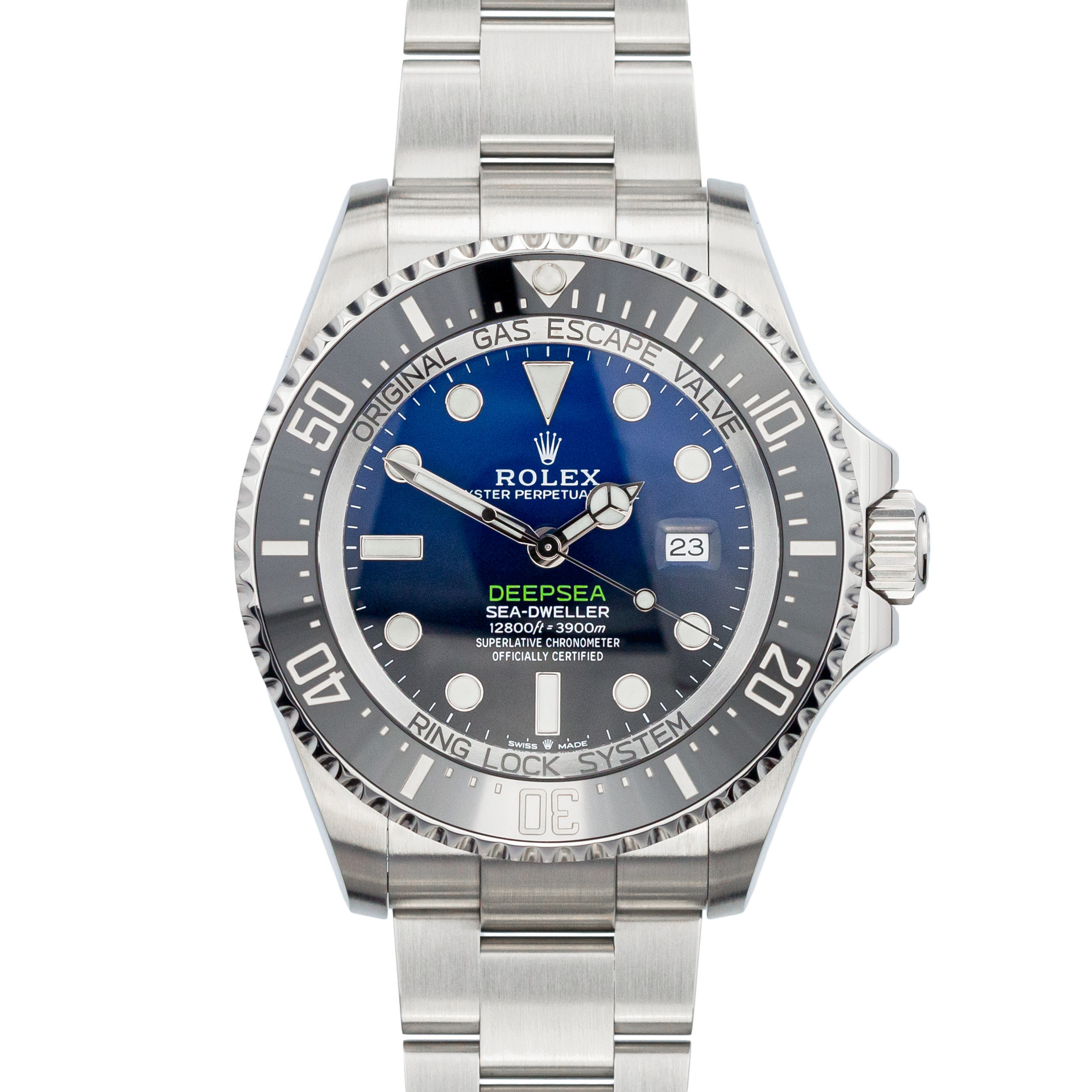
In 2012, James Cameron reached the Challenger Deep – the deepest point in the ocean, accompanied by a Deepsea. In honor of this achievement, Rolex created the D-Blue version – which is precisely today's interpretation.
The main difference from the standard model is the dial – with a gradient from black to blue and the green "DEEPSEA" inscription. This look quickly turned the model into one of the most sought-after among collectors.
The dial is extremely legible, and the Chromalight luminescence provides a strong blue glow in low light. The model also uses a "Maxi dial" – with larger hands and indices for better visibility.
The case back is solid and made of titanium, engraved with the full model name. As is characteristic of Rolex, 904L steel is used, which offers higher resistance, especially in aggressive environments.
One of the main differences from the previous generation is the movement – the Rolex Caliber 3235. It offers a 70-hour power reserve, improved winding efficiency, and includes 14 patents, being significantly more precise than COSC standards.
Visually, the most noticeable feature is the new, wider bracelet with a more massive clasp, which gives it more harmonious proportions. The bracelet has been redesigned for better comfort and flexibility.
Rolex has also paid attention to the details – a small crown on the dial at 6 o'clock, tighter tolerances between the case and the bezel, and an improved bezel profile for better durability.
The clasp includes the Glidelock system for fine adjustment, as well as a Diver extension for lengthening by up to 26 mm – an extremely practical solution for wearing over a wetsuit. The clasp itself is crafted from a solid block of steel, which guarantees strength and longevity.
All of this makes the Deepsea Sea-Dweller one of the most technologically advanced and impressive dive watches ever created by Rolex.