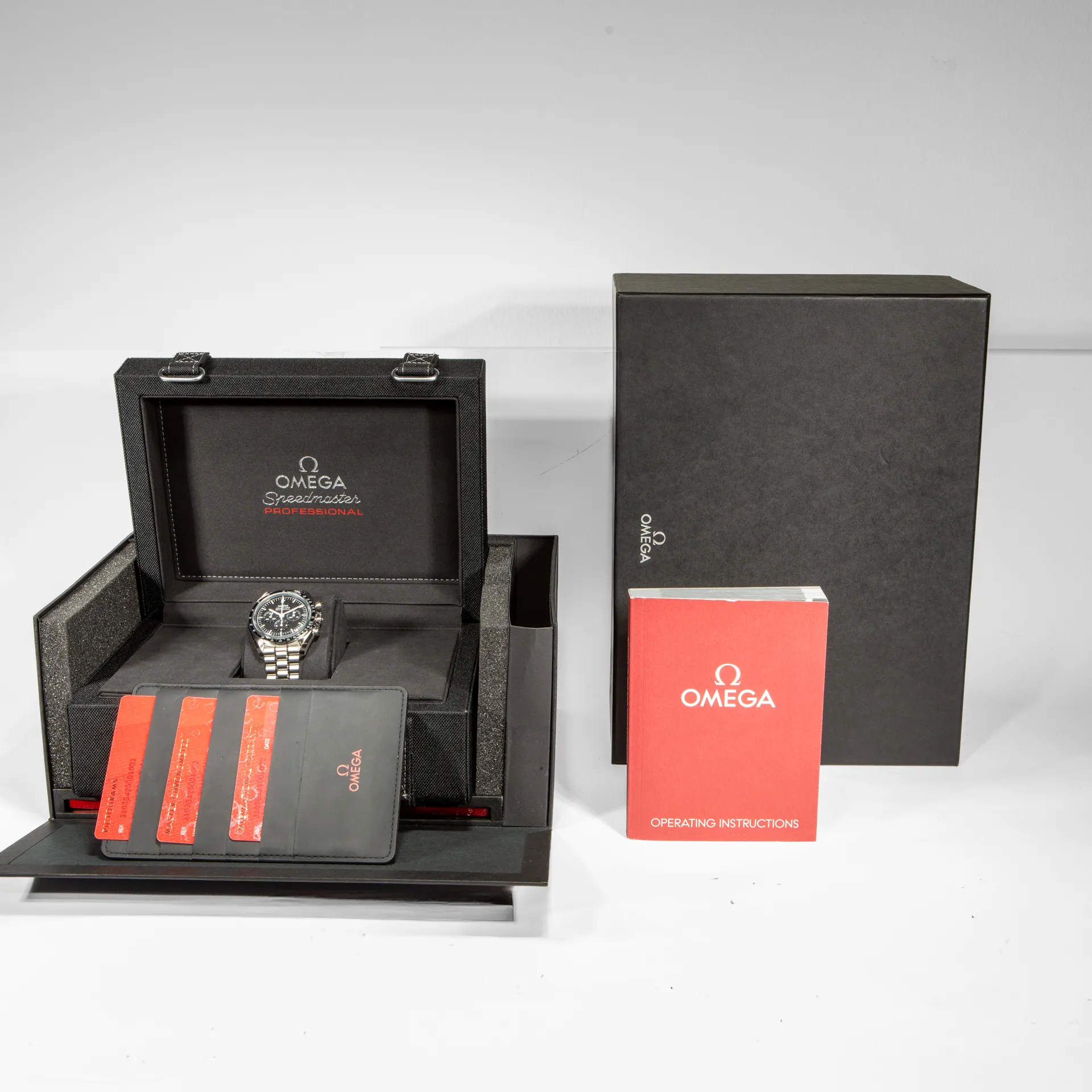
The history of Omega begins back in 1848, when the brand's founder, Louis Brandt, began hand-assembling pocket watches from parts supplied by local craftsmen in his native province of La Chaux-de-Fonds, Switzerland. It is important to note that the name Omega was not used until 1894, when Louis Brandt passed away and his business was taken over by his sons – Louis-Paul and César Brandt.
Today, Omega is known for its meticulous approach to testing all new movements, cases, and components. Every new movement is tested in existing models and under real-world conditions before being implemented in new developments. The brand's headquarters is in Biel/Bienne, and its collections include the Constellation, Seamaster, Speedmaster, and De Ville series.
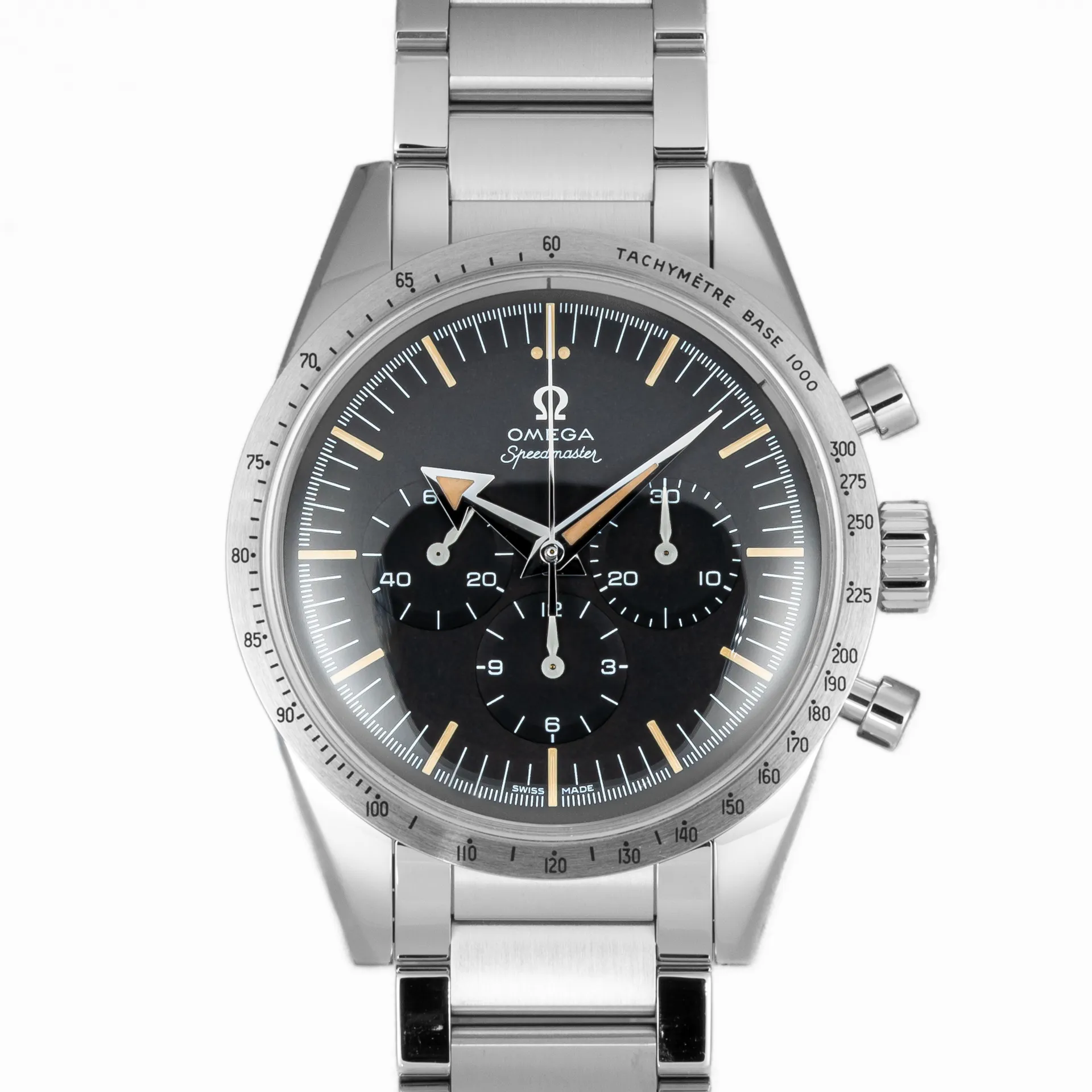
Undoubtedly, it is the Omega Speedmaster that has largely built the brand's modern image in recent decades. The greatest contribution to this comes from the so-called "moon" Speedmasters, but there are other models that deservedly hold a place of honor among collectors. One of them is reference 2915 from 1957 – distinguished by its characteristic "yellowed" indices and hands, produced for a short time, and having become an exceptionally sought-after model.
It is this that inspired Omega to create modern interpretations – first in 2013, and then in 2015 with a design even closer to the original, featuring "broad arrow" hands, darkened Super-LumiNova, and a strongly pronounced retro feel. The end result is an impressive model that attracts attention with both its appearance and its technical specifications.
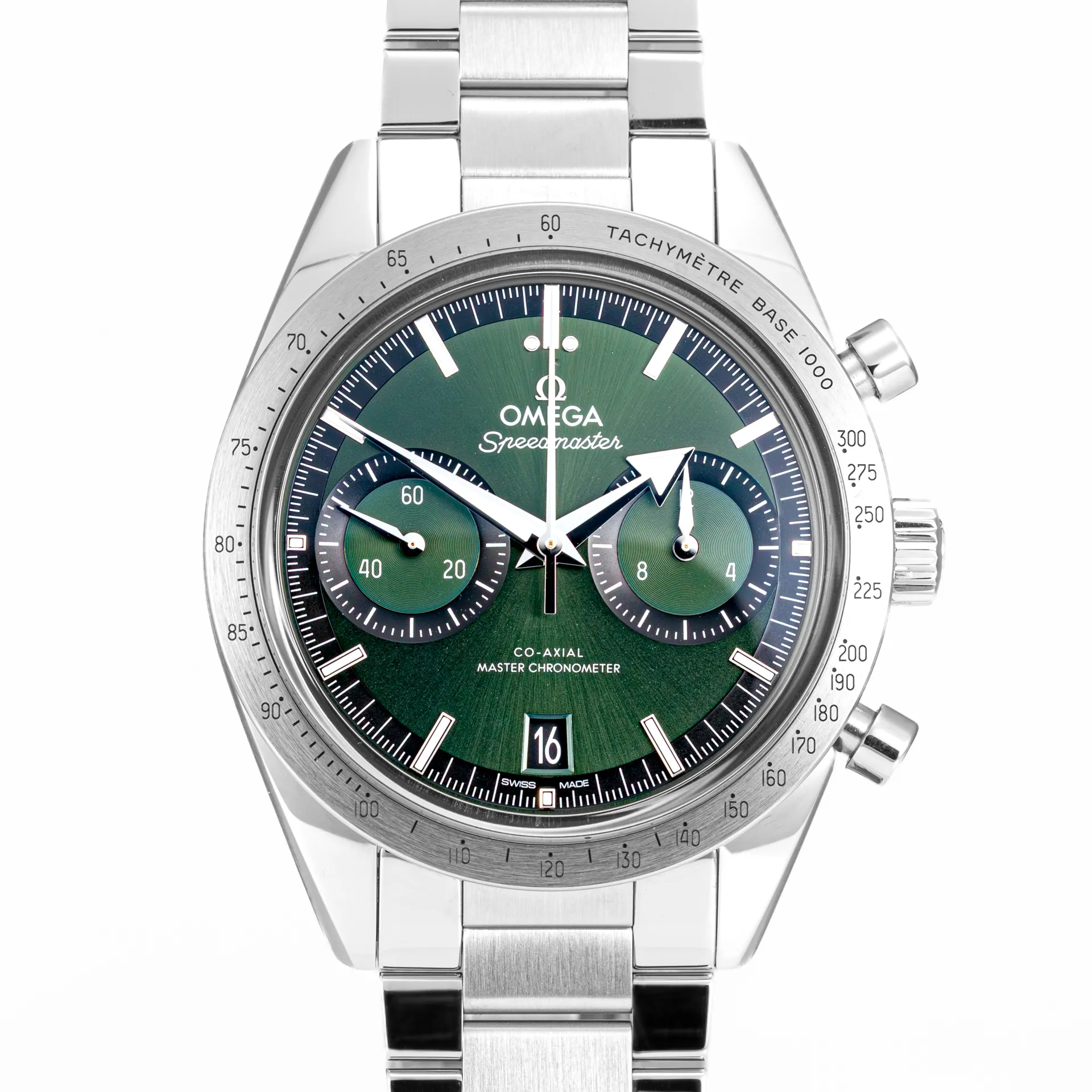
Today, we have the pleasure of presenting the newest version from 2023, executed in a highly contemporary green dial color.
We will draw your attention to the main differences compared to the previous generation, as it is through them that the model's evolution is best seen.
The new dial layout preserves the main concept but adds an even stronger retro feel – especially noticeable in the transition between the inner dial and the minute track. Additionally, there is a painted logo and a refreshed design of the minute markers.
The bezel has also been changed – it is slightly lighter, and the dot at "90" is now positioned above the number, which is a direct reference to the original design from the 50s.
The case has been significantly optimized – the thickness is reduced to 13.4 mm compared to 16 mm in the previous model. Although the difference may seem small on paper, it tangibly improves wearing comfort.
Another key element is the movement. Specifically for this model, Omega developed caliber 9906 – based on the well-known 9300, but with manual winding. It offers anti-magnetic protection up to 15,000 gauss, an exceptionally high-quality finish with rhodium plating, and "Geneva waves" in Arabesque style. It operates at a frequency of 28,800 vibrations, has 44 jewels, two barrels, and about 60 hours of power reserve, and is certified as a Master Chronometer by METAS.
The other significant change is the bracelet – with a new link profile and an updated buckle. Here, Omega returns to retro inspiration with a slimmer clasp and a characteristic grooved relief that complements the overall vintage feel of the timepiece.