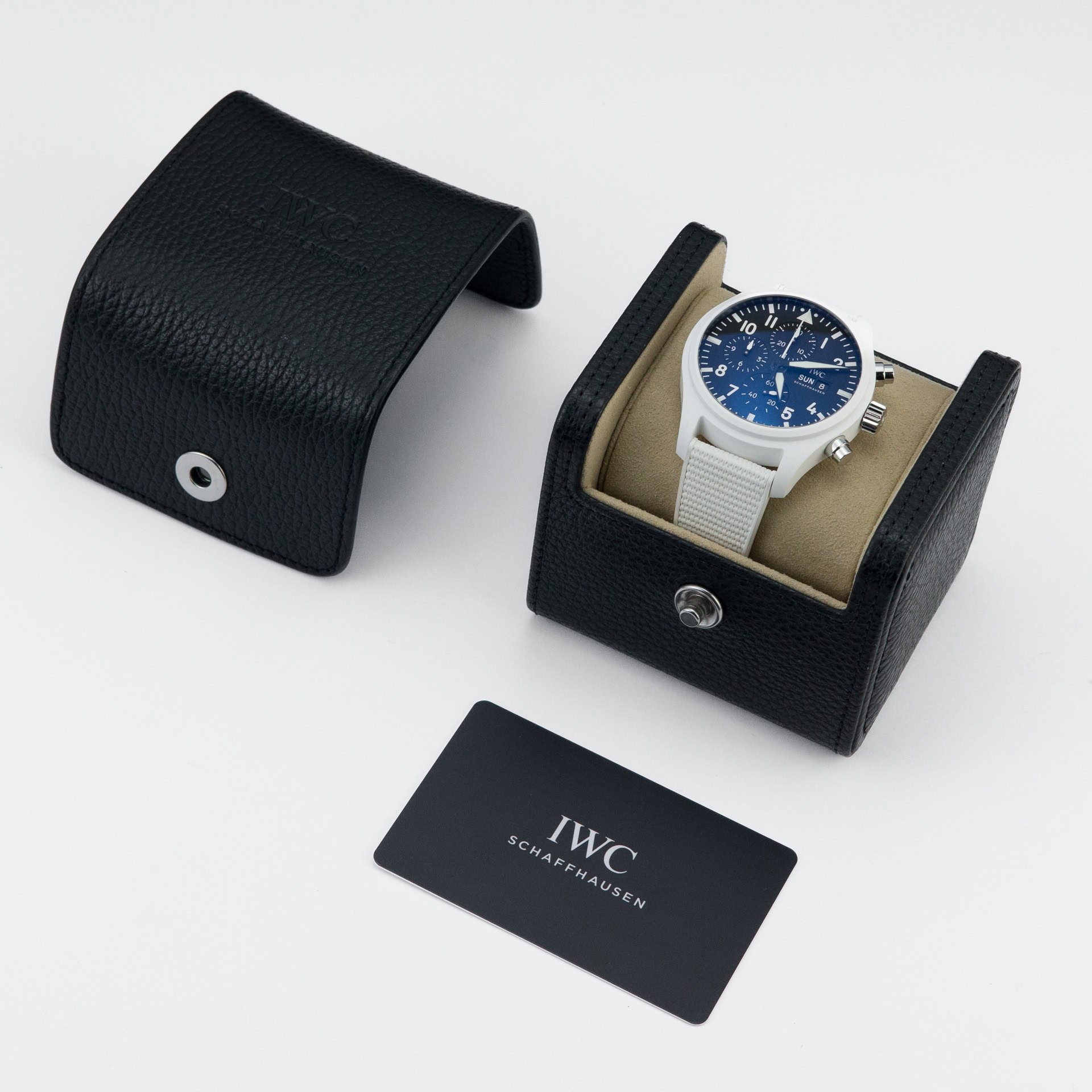
ChronographDateWeekdaySmall secondsLuminous numeralsLuminous handsScrew-Down CrownQuick SetLuminous indices
Description
IWC. There is hardly a connoisseur of the art of watchmaking for whom these 3 letters mean nothing. The brand, established in 1868 by American engineer and watchmaker Florentine Ariosto Jones in Switzerland, with the goal of producing high-quality watches for the American market, managed, acquired in 1880 by the Rauschenbach family, owned and managed by 4 generations of the family until 1955. The brand that was one of the first (as early as the end of the 19th Century) to begin producing wristwatches. The undisputed founder of the so-called "pilot's watches," the first to use titanium for the cases of its chronographs and to produce unique works of the art of watchmaking, such as the representatives of the Portugieser and Ingenieur series.
For us, the term "pilot's watch" automatically leads to "IWC". Perhaps the reason for this is due to the fact that IWC are known mainly for the production of pilot's watches, or because the brand developed its production especially during the Second World War, but most likely the main role in this was played by the fact that the brand supplied its products to both sides of the conflict. Both during and after the war, the countries that participated in the conflict were already very familiar with the quality of the brand, which gave it several important advantages in the race for the customer – recognizability, image, reputation.
It all began back in 1936 with the market launch of the famous Mark IX – which can be boldly described as the progenitor of IWC's pilot series, and perhaps of pilot's watches in general.
The model was first introduced in 2019 and is part of the brand's new series of pilot's watches, which is current to this day.
The Spitfire series is named in honor of perhaps the most renowned and famous representative of the Allied army's squadrons during the Second World War – the Supermarine Spitfire VB.
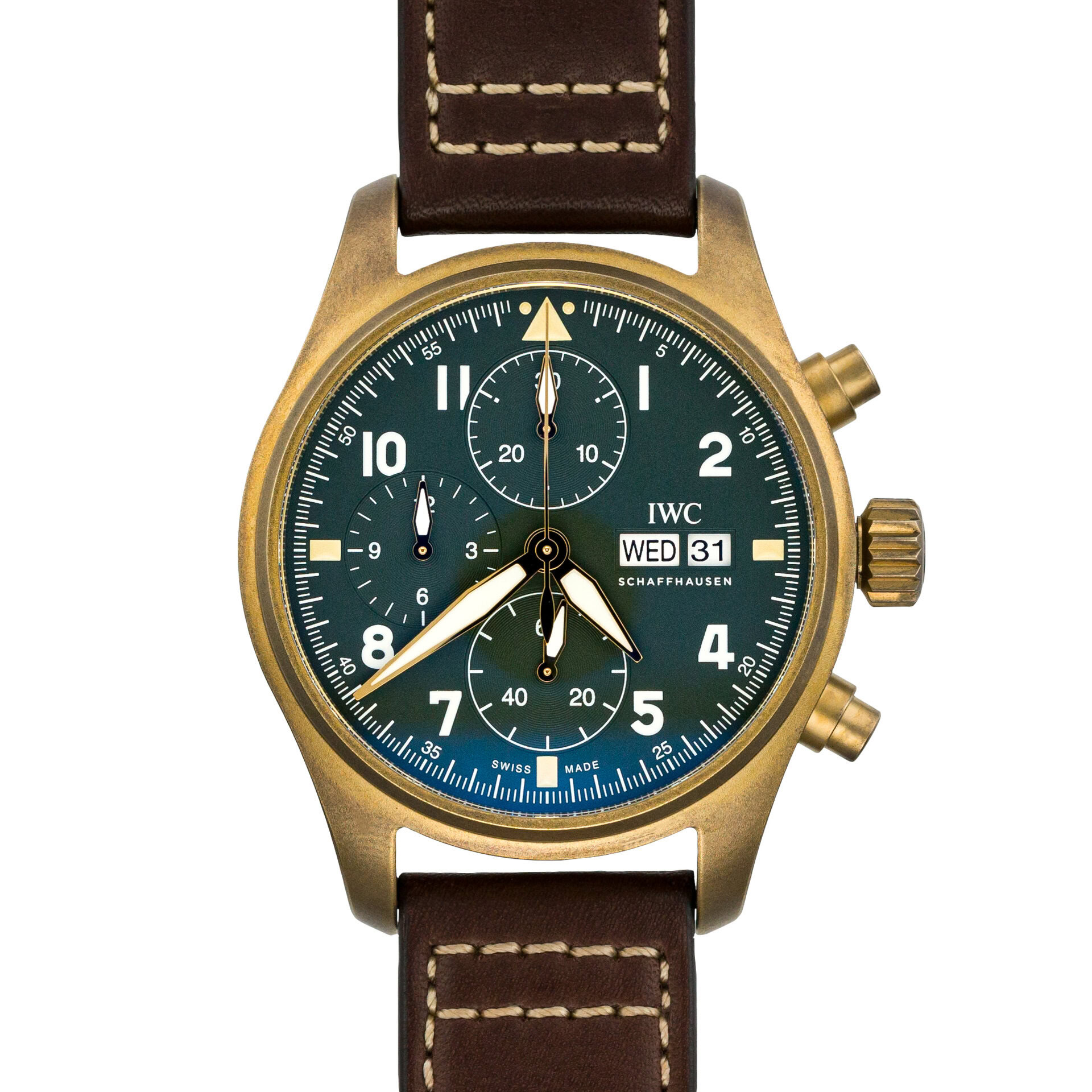
The color of the dial refers to the elegant fuselage of this legendary Briton, and the shape of its hands is reminiscent of the propeller blades of this aircraft. Also a reference to those times is the material used for the case – bronze was widely used in the production of measuring instruments on combat aircraft from the first half of the last century, and this is another connection of the model to its namesake.
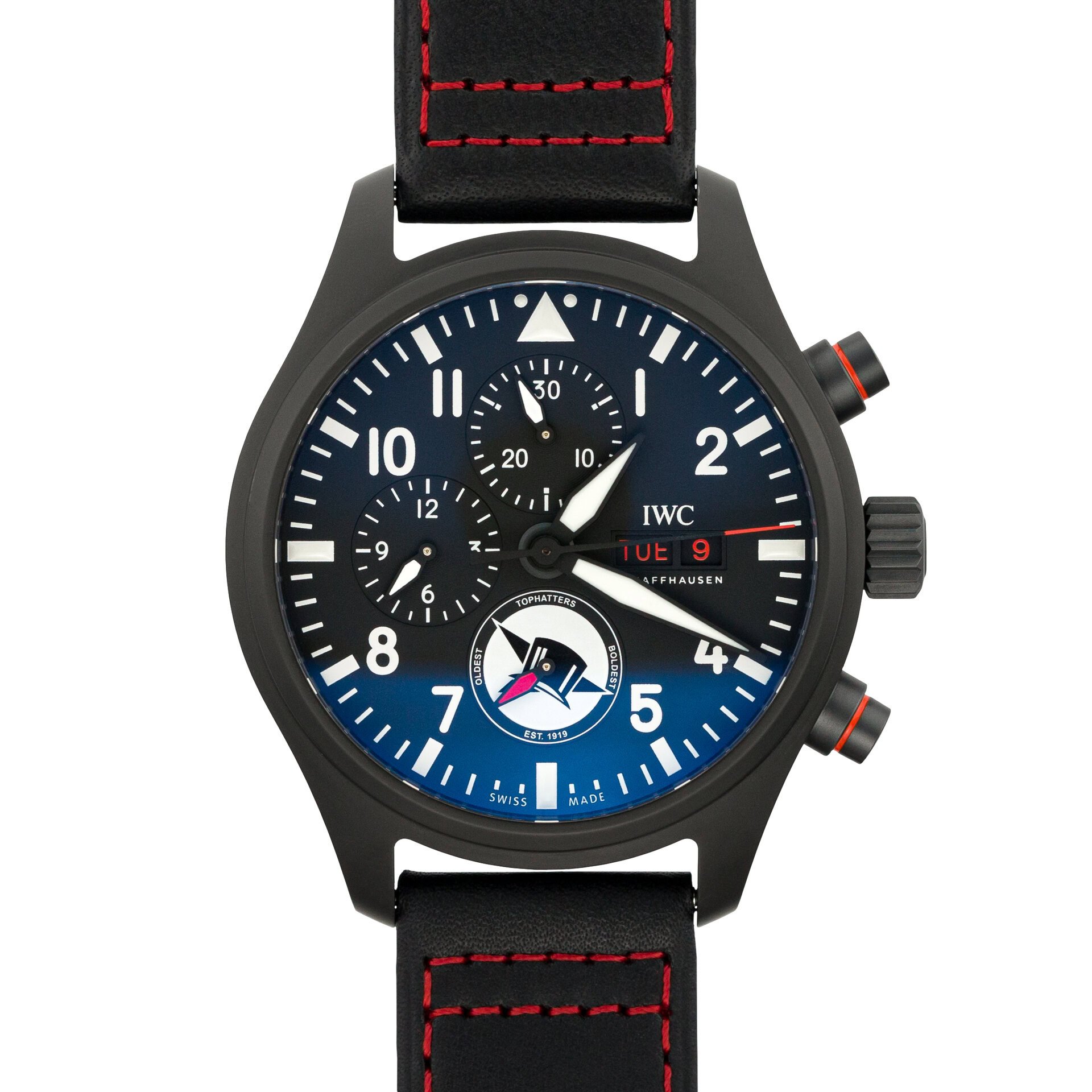
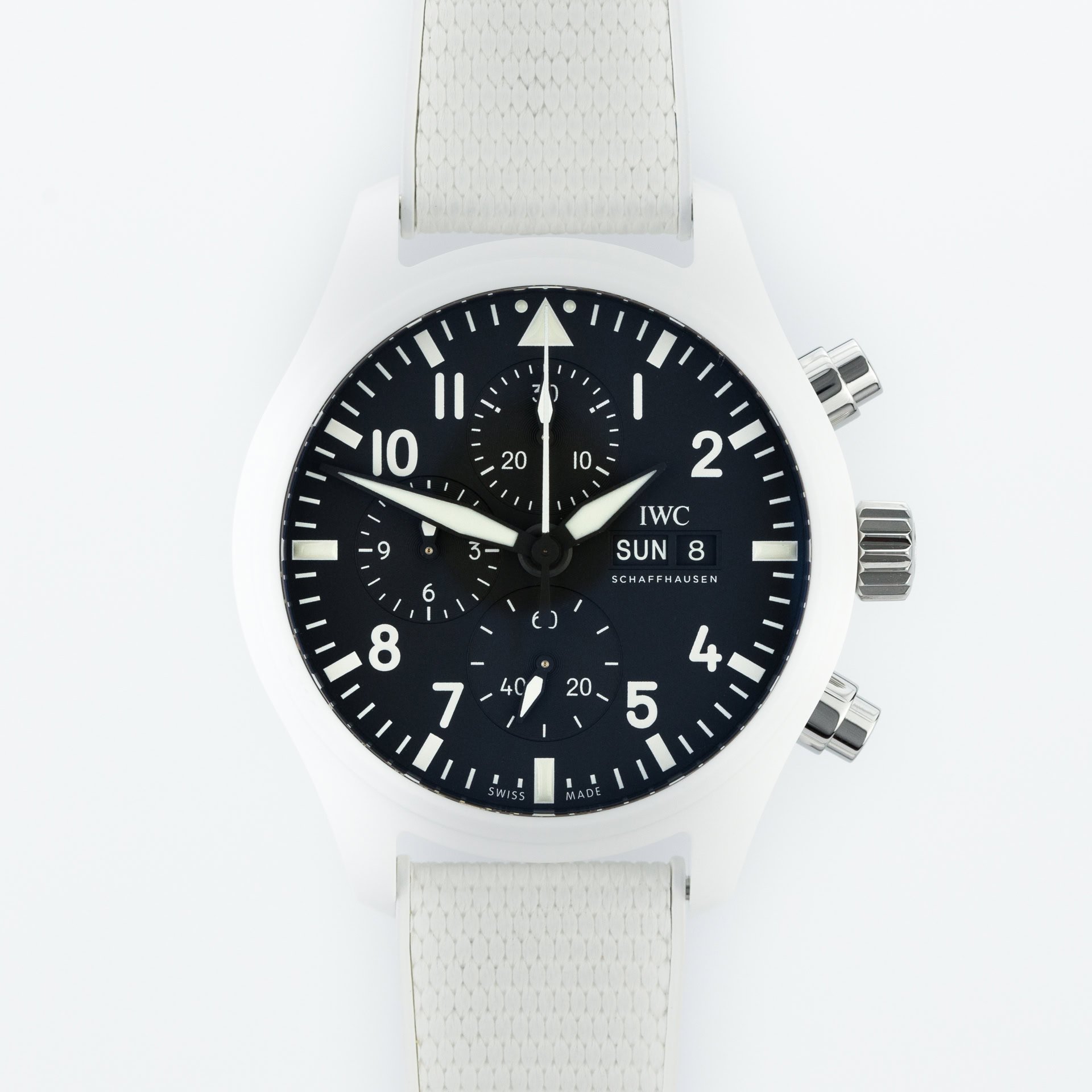
The legibility of the watch is one of the best of all the timepieces that have passed through our hands. The colors of the dial are unusual – olive green and bronze, in combination with white for the luminescent parts.
The purity of the design of the "Day-Date" window is just as unique. Nowadays, we would hardly rely on a watch to learn the date and the day, but the very fact that after a quick glance at the wrist we can get this information personally makes us somehow more calm and secure.
The luminescence is one of the strongest for pilot's watches in general and glows with a pleasant bluish light. The large Arabic numerals are well depicted and positioned, and the generous coating on the hands, which are in the shape of an airplane propeller, completes this truly unique composition!
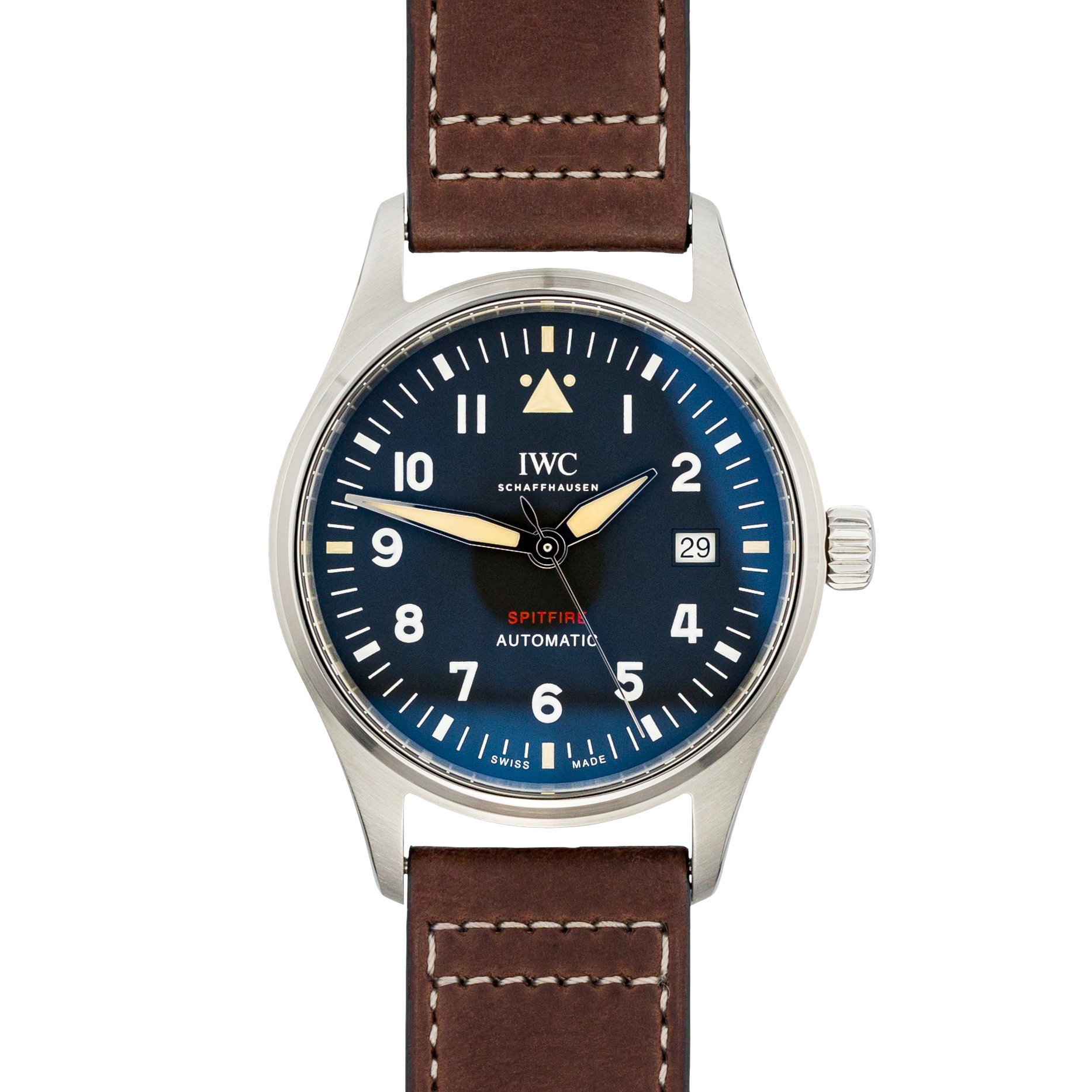
The original brown calfskin strap with contrast stitching is distinctive and imparts the expected specialized look to the watch.
The case size is 41 mm – standard for the new IWC pilot models, and precisely because of this, the watch is very compact and comfortable to wear, and on the wrist it sits very elegantly, yet at the same time is eye-catching.
At the heart of the watch beats Caliber 69380, an in-house movement of the brand with 242 components, 33 jewels, operating at 28,800 vibrations and offering a power reserve of 46 hours, the case back is made of titanium, which guarantees not only comfort in wearing, but also that contact with the skin will be comfortable.