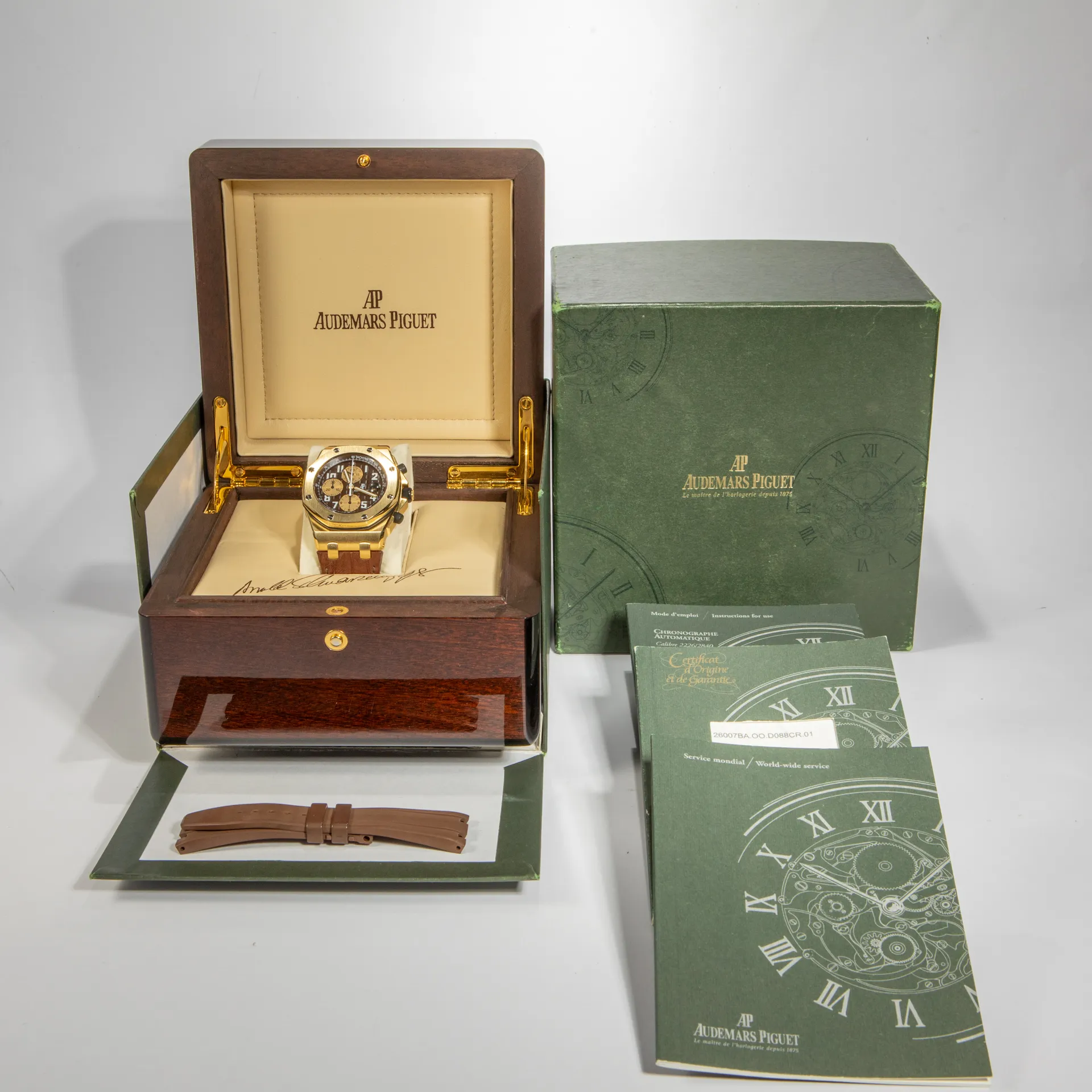
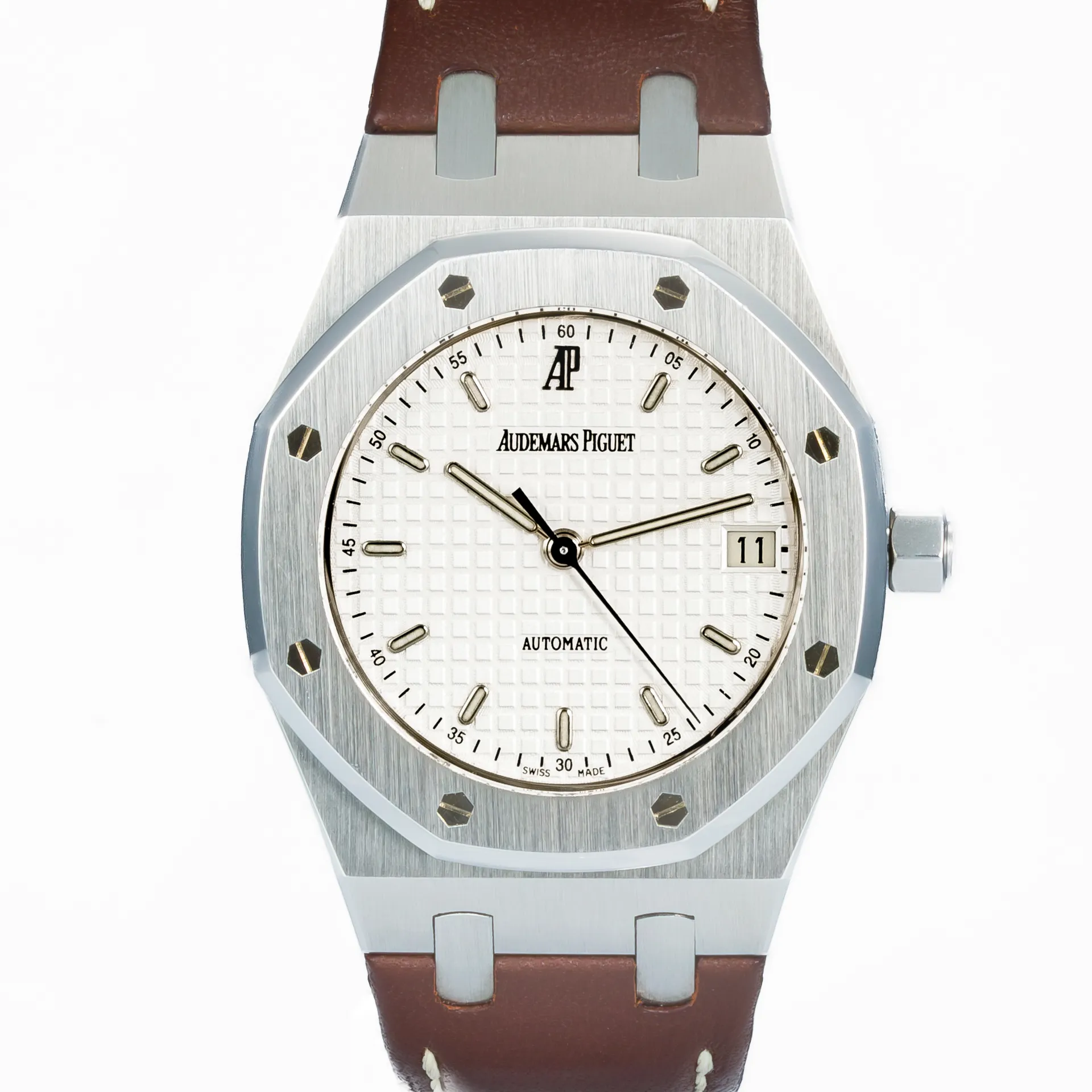
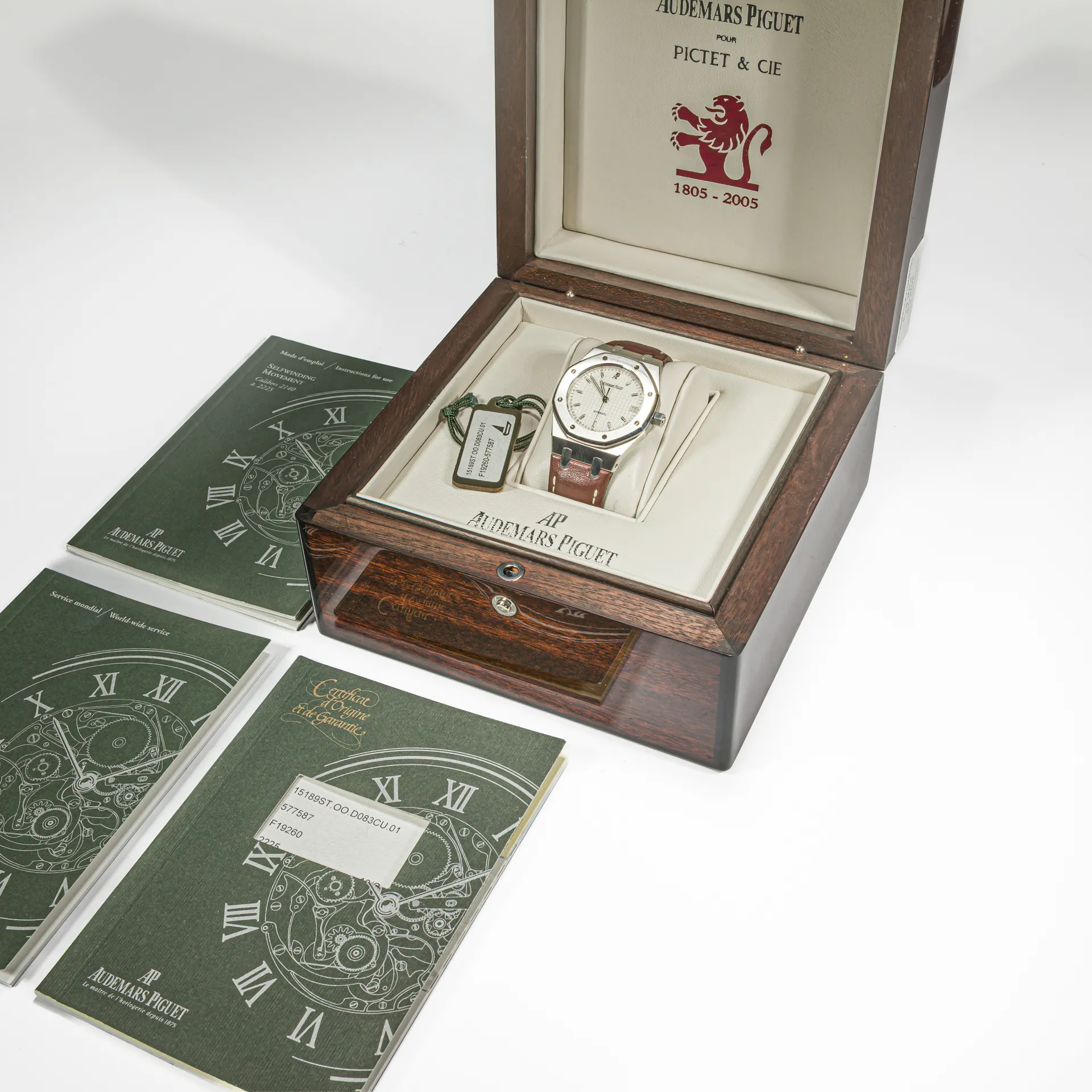
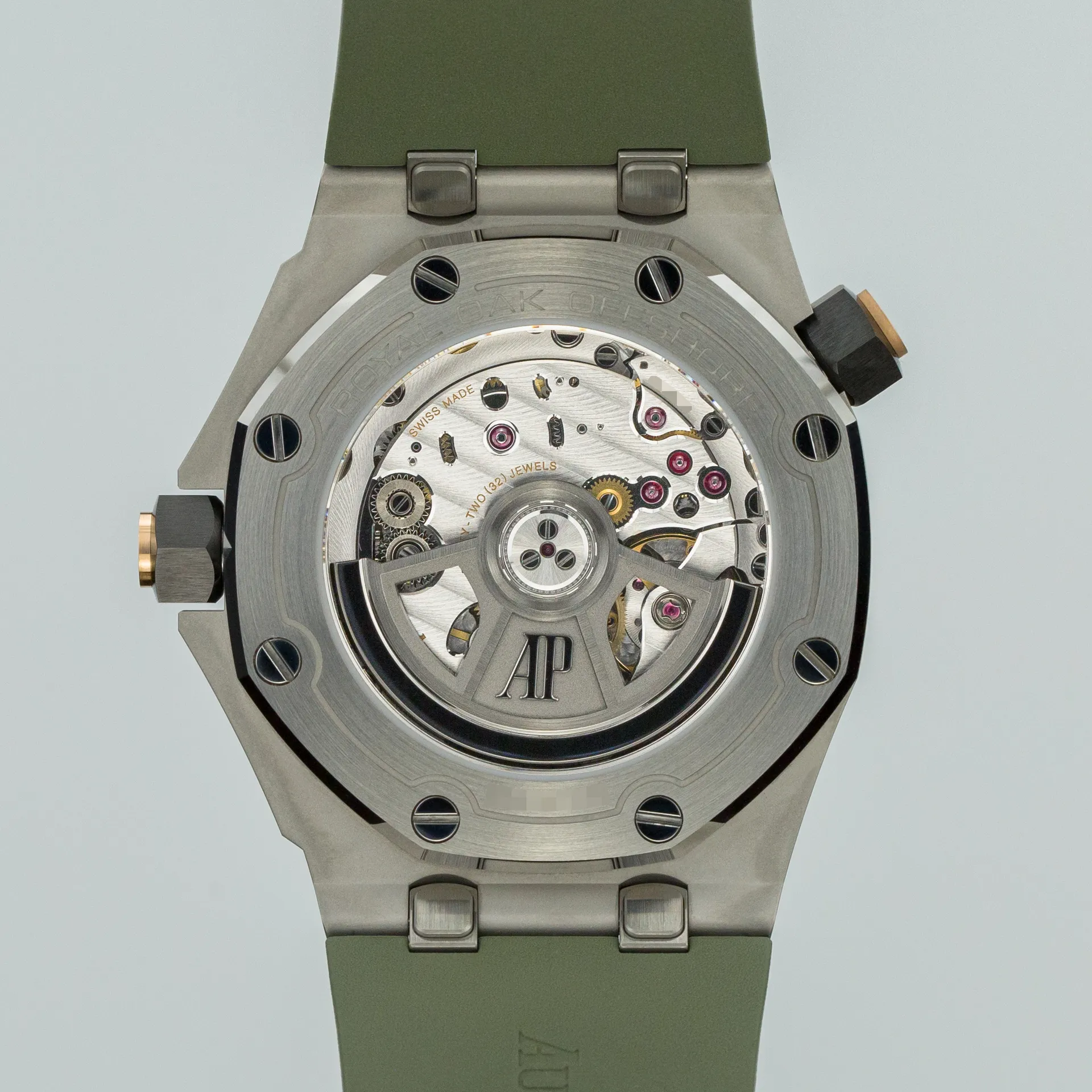
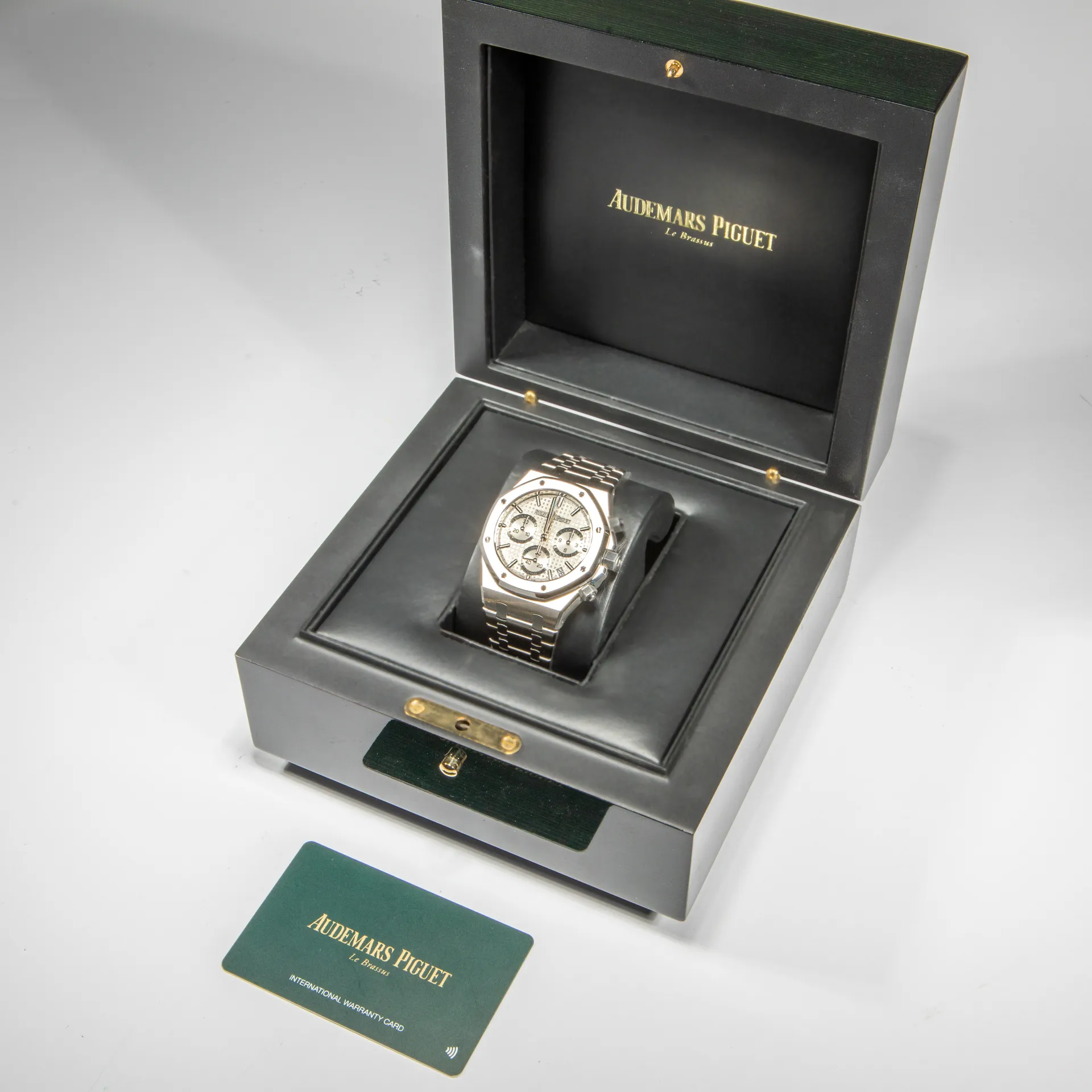
For us (and probably for many other people), the Royal Oak is the most iconic model of Audemars Piguet, and the reasons for this are countless. Beginning its journey in the 70s thanks to Gérald Genta, this series has undergone numerous interpretations, but several key elements remain unchanged – the octagonal case, the "waffle" dial, the characteristic design of the lugs, and the overall aesthetic.
The first Audemars Piguet Royal Oak Chronograph was introduced in 1997 in a version with a 39 mm diameter. Fifteen years later, in 2012, a 41-millimeter version of the model was launched for the first time, which quickly became extremely sought-after. There are several reasons for this – despite the larger size, the watch is more balanced and comfortable to wear, and it also meets the growing demand for larger cases.
Initially, two steel versions were introduced – with a black and a silver dial. Five years later, three more variants with the so-called "Panda" layout were added – with main colors of black, silver, and blue. They received new references, but the differences compared to the earlier versions are mainly cosmetic and relate to the design of the dial.
This particular model is from the updated version introduced in 2017, and it is the blue dial that makes it the most sought-after among the brand's admirers. The combination is perfectly balanced – a rich blue main color with silver subdials, which creates an exceptionally elegant and recognizable look.
As for the movement, unlike the caliber 3126/3840 used in the brand's Offshore chronographs (based on the 3120 with a Dubois Depraz module), a different approach was used for the Royal Oak Chronograph. Here, the integrated caliber AP 2385 is used, based on the Frederic Piguet 1185 – a column-wheel chronograph with 37 jewels, a power reserve of about 40 hours, and a frequency of 21,600 vibrations per hour. This is a proven and reliable movement, used in various forms by other members of the so-called "Holy Trinity".