Audemars Piguet Royal Oak Chronograph... | Chronoteka
1 of 9
Image 1 of 9: Royal Oak Chronograph - Image 1
Share this watch
Why Choose Chronoteka
Authenticity Guaranteed
Every watch is verified by our expert team
12-Month Warranty
Peace of Mind
Expert Support
Professional guidance throughout your purchase
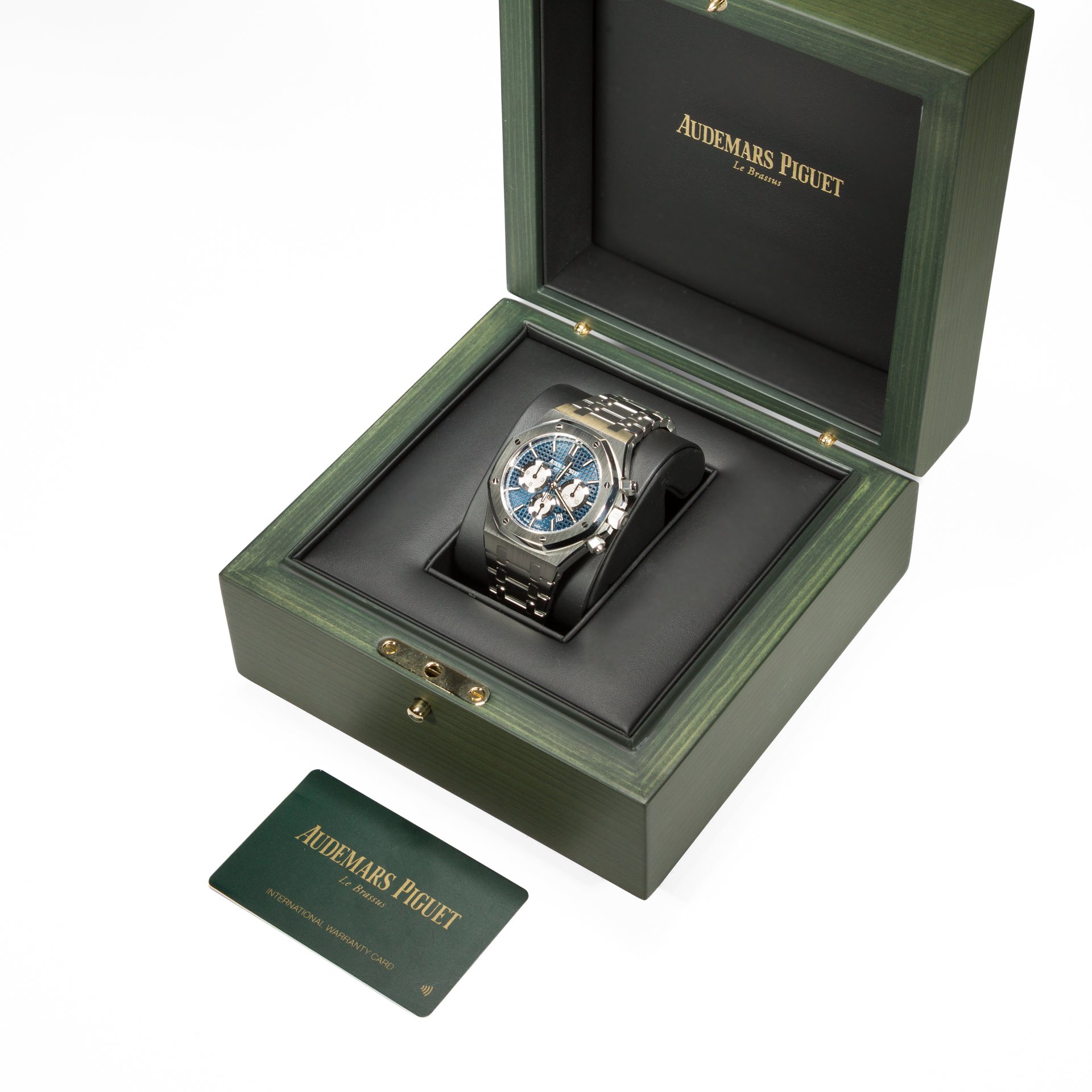
Audemars Piguet Royal Oak Chronograph
Reference: 26331ST.OO.1220ST.02
€37,999.00
Year
2020
Condition
Very Good
Set
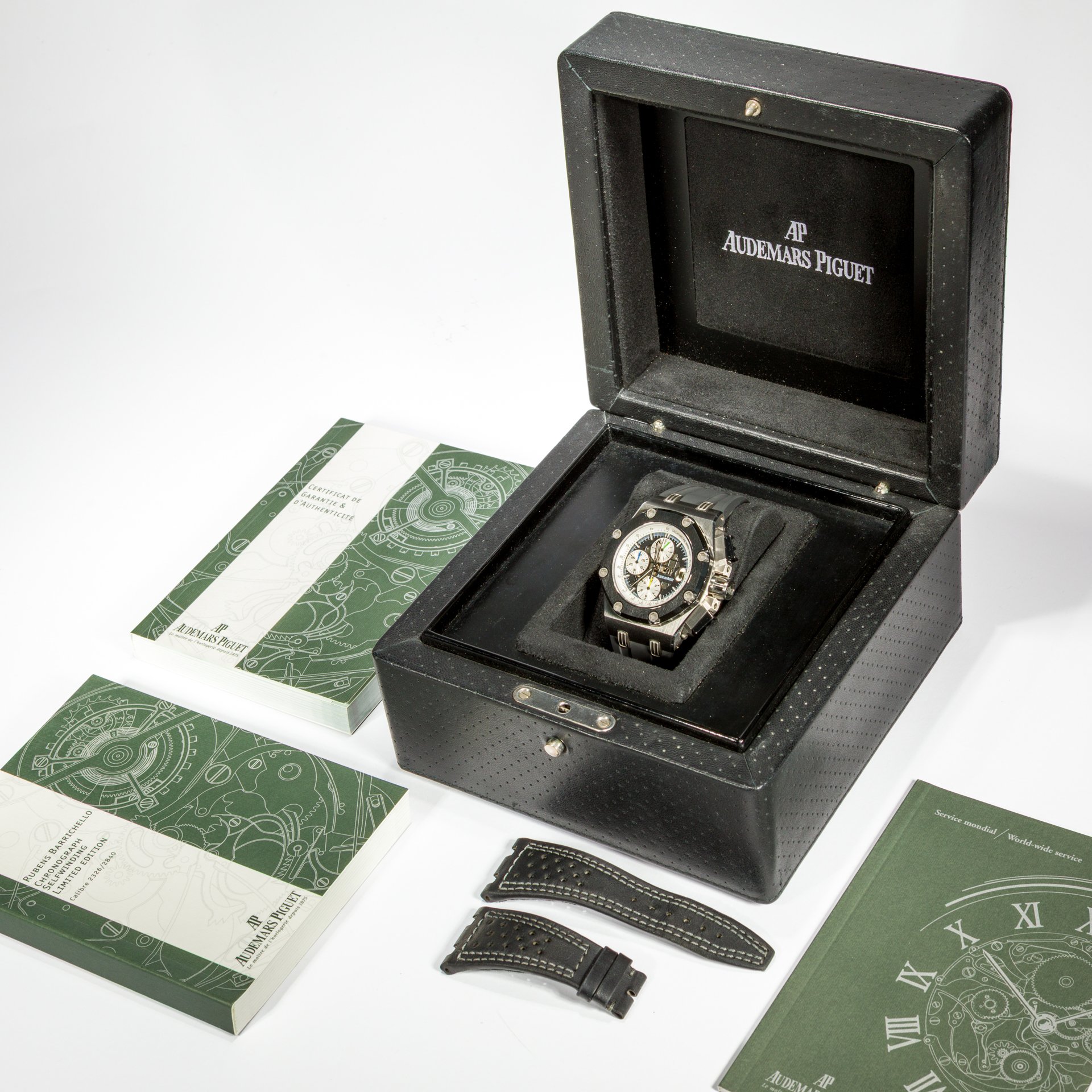
Full Set
Specifications
MovementAutomatic
Case MaterialSteel
Case Size41mm
Power Reserve40 hours
Dial ColorBlack
Complications & Features
ChronographDateSmall secondsLuminous handsScrew-Down CrownLuminous indices
Description
For us (and probably for many others), the Royal Oak is the most iconic Audemars Piguet model, and the reasons for this are countless. Beginning its journey in the 70s, thanks to the deft touch of Gerald Genta, this series has undergone numerous iterations, but a few things have never changed – the octagonal case, the “waffle” dial, the design of the lugs, etc.
The first Audemars Piguet Royal Oak Chronograph was launched as late as 1997 in a 39 mm version. 15 years later, namely in 2012, a 41 mm version of the model was introduced for the first time and as you can guess, it immediately became much loved and sought-after. The reasons for this are many – first, despite its larger size, the version turned out more balanced and comfortable to wear. Second, this size is more in line with the public's interest in larger watches. Initially, two steel versions were introduced – with a black and a silver dial, and 5 years later, 3 new dials were launched, the so-called “Panda” with main black, silver, and blue colors – they received a new reference, but the differences compared to the version presented today are minimal and only cosmetic in the design of the dials. Today's model is from the newer version, launched in 2017, and due to the main black color of the dial, it receives the nickname “Reversed Panda”. The dial combination is very balanced – a black main color with silver subdials, it truly creates a unique impression!
As most of you probably know, unlike the in-house caliber 3126/3840 used in AP's Offshore chronographs – a modular chronograph based on the 3120 with a Dubois Depraz chronograph module, the ROC chronographs receive something different, to say the least – the AP Calibre 2385, based on the Frederic Piguet 1185 column-wheel chronograph, with 37 jewels, a 40-hour power reserve, operating at AP's usual frequency of 21,600 vibrations, and to emphasize the noble origin of the movement, the balance is crafted from 22-karat gold – a very proven and reliable movement, which is fitted under different names in many models of the Holy Trinity.